

|
Getting your Trinity Audio player ready...
|
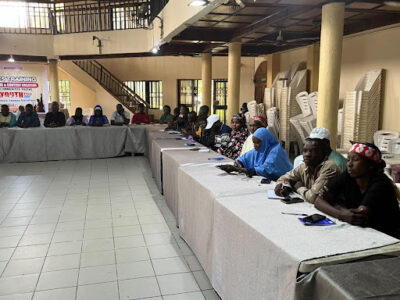
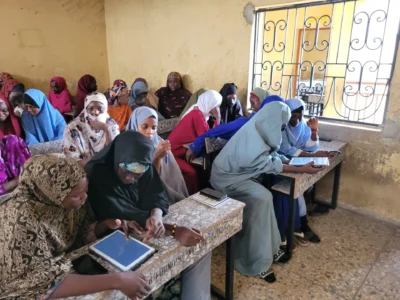
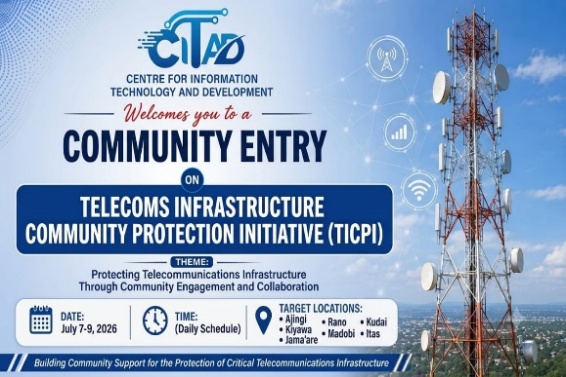
The Centre for Information Technology and Development (CITAD) conducted a three-day community engagement exercise across seven pilot communities in Kano, Jigawa, and Bauchi states under its Telecommunications Infrastructure Community Protection Initiative (TICPI). The exercise sought to strengthen community participation in safeguarding Nigeria’s Critical National Information Infrastructure (CNII) through collaboration among traditional institutions, community members, security agencies, civil society organisations, and telecommunications service providers.
The initiative builds on an earlier stakeholders’ engagement held in Dutse, Jigawa State, where representatives of community-based organisations (CBOs) from the seven pilot communities identified major threats to telecommunications infrastructure and explored practical community-led solutions. Following the meeting, participants conducted local sensitisation activities to prepare their communities for the engagement.
During the community entry, the CITAD team visited Rano and Ajingi in Kano State; Kudai, Madobi and Kiyawa in Jigawa State; and Itas and Jama’are in Bauchi State, where they met with emirs, district and village heads, religious leaders, youth groups, security agencies, and other key stakeholders. Across all locations, community leaders welcomed the initiative and reaffirmed their commitment to supporting efforts aimed at protecting telecommunications infrastructure from vandalism and other threats.
Discussions across the seven communities revealed several recurring challenges. These included inadequate community involvement in protecting telecommunications facilities, poor public awareness of the importance of critical digital infrastructure, inadequate remuneration and deployment of security personnel guarding telecom installations, and limited corporate social responsibility initiatives by service providers. Participants also raised concerns over network coverage gaps in some communities and the absence of structured mechanisms for reporting suspicious activities around telecommunications facilities.
To address these challenges, stakeholders unanimously recommended the establishment of Inclusive Community Protection Committees in each of the pilot communities. The committees will bring together traditional institutions, youth groups, community-based organisations, security agencies, and telecommunications operators to coordinate local efforts aimed at preventing vandalism, promoting public awareness, and encouraging community ownership of telecommunications infrastructure.
Participants further recommended increased community engagement by service providers, improved welfare and training for security guards, development of awareness materials in local languages, and stronger collaboration with farmers, herders, and other community groups whose activities often bring them close to telecommunications installations. Communities also called on telecommunications companies to strengthen their corporate social responsibility programmes as a way of fostering local support for protecting critical infrastructure.
At the end of the exercise, all seven communities agreed to establish their respective protection committees, with CITAD providing technical guidance during their inauguration and subsequent activities. The engagement reached approximately 100 participants and marked an important step toward building community-driven mechanisms for protecting Nigeria’s telecommunications infrastructure. Through TICPI, CITAD continues to promote inclusive partnerships that strengthen digital resilience, improve connectivity, and support sustainable development by ensuring that critical communications infrastructure remains safe, accessible, and resilient.