
|
Getting your Trinity Audio player ready...
|
- Background and Rationale
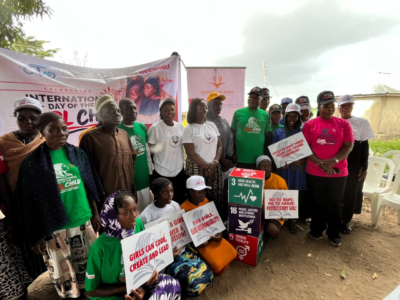
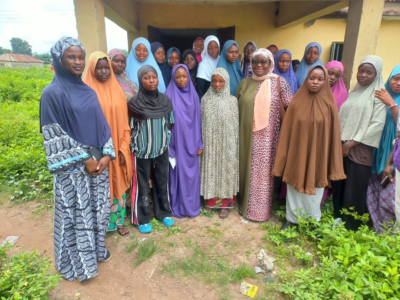
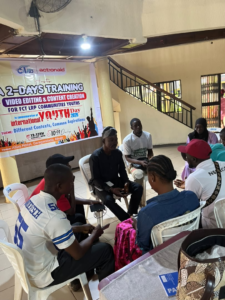
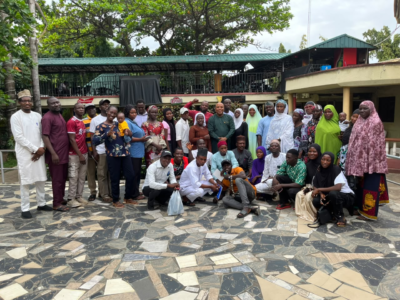
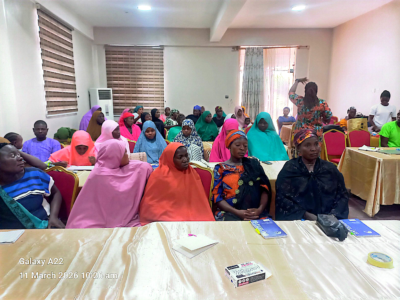
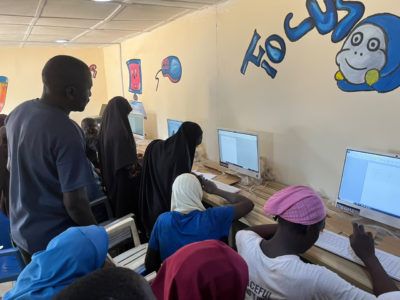
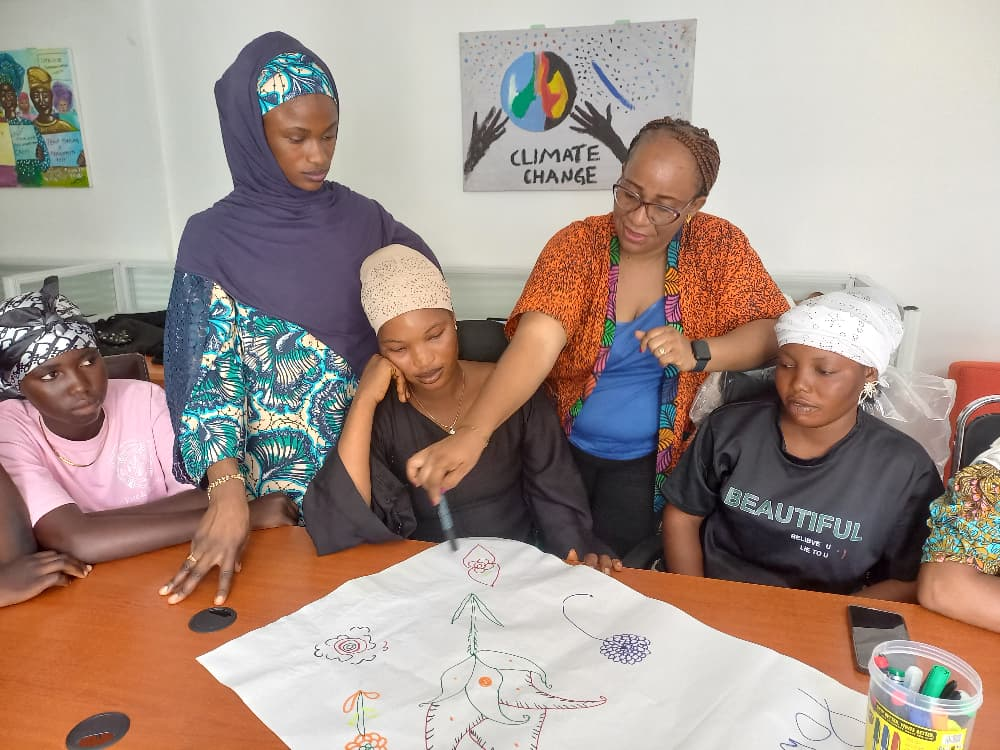
The Girl-Led Action (GLA) project, funded by ActionAid Nigeria (AAN), aims to strengthen girls’ confidence, leadership abilities, research skills and capacity to advocate for their rights. As part of the project, CITAD and AAN jointly facilitated a two-day training for girls at the AAN office in Abuja on 18 and 19 September 2026.
The training equipped the girls with the knowledge and skills to understand their rights, to generate evidence on the problems affecting them through research, and to use that evidence to engage decision-makers and demand accountability.
- Objectives of the Training
- To empower girls to understand their rights and identify appropriate channels for demanding accountability and addressing issues that affect their lives.
- To build girls’ confidence and leadership abilities, including feminist leadership skills.
- To equip girls with basic research skills for identifying problems and gathering evidence.
- To strengthen girls’ capacity to advocate to relevant stakeholders and decision-makers.
- To encourage solidarity and the creation of safe spaces in which girls can support, protect and learn from one another.
- Methodology
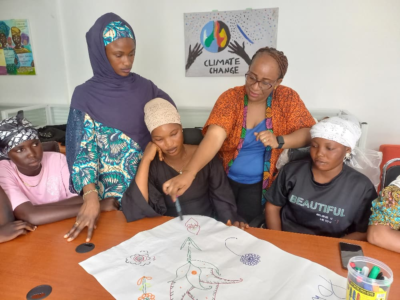
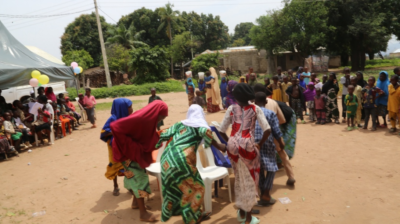
The training used participatory and interactive methods: self-introductions and expectation-setting, facilitated presentations, experiential exercises (Power Flower and Human Box), plenary discussions, group work with presentations, and a recap session.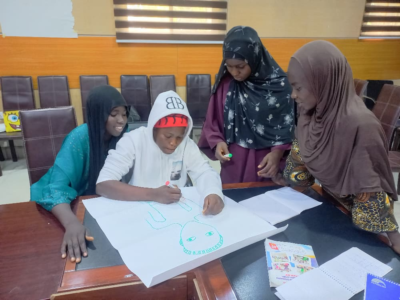
- Opening Session
The training began with participants introducing themselves and sharing their expectations. Yesmin Salako of CITAD then presented the objectives of the training, explaining that it was designed to empower girls to understand their rights and identify appropriate channels for demanding accountability.
Ebele explained that research involves asking questions, gathering information and identifying problems, while advocacy involves engaging relevant stakeholders to seek solutions and promote the realisation of rights. She stressed that empowerment does not mean physical confrontation but developing the knowledge, confidence and skills needed to demand justice and positive change, and she encouraged the girls to create safe spaces where they can support, protect and learn from one another.
Power Flower Exercise. The exercise introduced five forms of power and how they influence individual and collective action:
- Power With– shared power built on collaboration, mutual respect, solidarity and collective action.
- Power Over– dominance, authority or control exercised over others.
- Power Under– power experienced where people feel constrained or subordinate because of social structures and circumstances.
- Power Within– inner strength, self-worth, confidence and personal agency.
- Power To– the capacity to take action, create opportunities, solve problems and achieve goals.
Participants reflected on how to recognise their strengths, overcome limitations and use collective power to address issues affecting them.
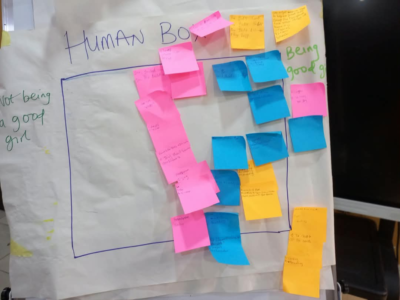
Human Box Exercise. The exercise explored societal expectations and stereotypes about “good girls” and “bad girls”. A “good girl” was associated with performing household chores, respecting parents, elders and community members, achieving good academic results, avoiding staying out late and behaving responsibly. A “bad girl” was associated with staying out late, disrespecting parents and elders, refusing household chores, consuming alcohol with peers, poor academic performance, stealing and poor personal hygiene. The discussion helped participants examine how social norms and stereotypes shape girls’ behaviour, choices and opportunities.
 Identification of Issues Affecting Girls. Participants identified the following challenges to girls’ rights, wellbeing, safety, education and personal development:
- Inadequate access to menstrual hygiene products– high cost and limited availability of sanitary pads; some girls miss school during menstruation.
- Limited access to quality education– long distances to school, education-related costs and inadequate transport; participants called for free, accessible and quality education for all girls.
- Unequal distribution of unpaid care work– girls carry more household chores and caregiving than boys of the same age, reducing time for study, rest and personal development.
- Low self-esteem and body shaming– negative comments, peer pressure and criticism from parents and teachers undermine confidence.
- Gender-based violence (GBV)– physical and verbal abuse, sexual harassment and other forms of violence.
- Child and early marriage– driven by cultural practices and financial hardship, interrupting education and increasing risks such as teenage pregnancy.
- School dropout– linked mainly to inadequate financial support from parents and guardians.
- Inadequate access to hygienic toilets– affects personal and menstrual hygiene and can contribute to open defecation, environmental contamination and disease.
- Poor road infrastructure– makes it difficult to reach schools and services and discourages school transport providers.
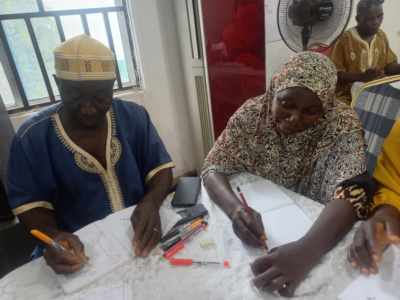
Group Discussions and Presentations. Groups discussed Power Within, Power Under, Power To and Power With and how these affect their daily lives. On supporting one another, participants agreed on four actions: encouraging and supporting fellow girls; acquiring knowledge and educating themselves about their rights; reporting abuses and wrongdoing through appropriate channels, including relevant authorities; and promoting solidarity and creating safe spaces for girls to discuss concerns and seek support.
Strategies for Effective Advocacy. Rolake explained that successful advocacy combines research, clear communication, strategic engagement and collaboration with decision-makers. Eight strategies were discussed:
- Define advocacy objectives– set clear, measurable goals (e.g. policy change, funding or awareness on early or forced marriage).
- Conduct research and gather evidence– collect reliable information, statistics and personal testimonies using questionnaires and interviews.
- Engage decision-makers directly– meet officials of the Ministry of Education and Ministry of Women Affairs, Area Council chairmen, school principals, head teachers and community leaders, using personal stories to show the impact of issues.
- Mobilise communities– town hall meetings, letter-writing campaigns, peaceful demonstrations and other lawful collective action.
- Use digital and social media– Facebook, WhatsApp, X and Instagram to raise awareness and mobilise support.
- Engage traditional media– press releases, radio programmes and television interviews.
- Build strategic partnerships– with civil society organisations, community groups, unions and other stakeholders to pool resources.
- Monitor and evaluate progress– track activities, assess results against objectives and adjust strategies.
- Day Two – 19 September 2026
7.1 Recap of Day One. Yesmin Salako led a recap in which participants reviewed the previous day’s discussions and shared key lessons on forms of power, issues affecting girls, and the importance of research and advocacy. This reinforced understanding and clarified concepts before the day’s sessions.
7.2 Identifying Stakeholders for Research and Advocacy. Ebele facilitated a session on identifying the individuals and institutions to engage when conducting research or advocating for change, i.e. those who understand the problem, influence decisions, or hold authority and resources. Participants identified four stakeholder groups: (i) community members, both male and female; (ii) community leaders, including traditional rulers; (iii) lawmakers and relevant government stakeholders; and (iv) school proprietors and educational authorities. The session stressed matching stakeholders to the issue being investigated and the change being sought.
7.3 Feminism and Feminist Leadership Skills. Seember explained that feminism promotes equality between women and men in social, political and economic life, including equal rights, opportunities, fair treatment and workplace equality, and a society in which everyone enjoys dignity and respect regardless of gender. The session encouraged participants to recognise gender inequality, challenge discriminatory practices and develop leadership skills that promote inclusion, fairness, accountability and respect for the rights of others.
- Conclusion
The GLA training strengthened participants’ understanding of their rights and of the practical steps they can take to address challenges in their lives and communities. Through interactive exercises, group discussions and facilitated sessions, the girls explored forms of power, identified key barriers to their development, and learnt how research and advocacy can drive change. The training provides a foundation for the girls to build confidence, support one another, and engage authorities and community stakeholders for improved access to education, safety and essential services in line with CITAD’s mission of empowering citizens through capacity development, research, advocacy and partnership.