
|
Getting your Trinity Audio player ready...
|
Theme: Assessing Nigeria’s Position in the 2025 Network Readiness Index (NRI)
Date: 6 May 2026
Venue: Prof. Bjorn Beckman Hall
Time: 10:00 AM – 1:30 PM
Organized by: Centre for Information Technology and Development (CITAD)
Introduction
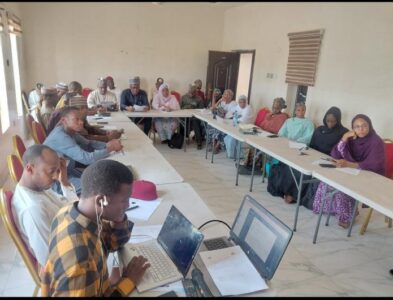
The Centre for Information Technology and Development (CITAD) convened the 5th Digital Tech Policy Forum to critically examine Nigeria’s performance in the 2025 Network Readiness Index (NRI) and explore pathways for accelerating the country’s digital transformation agenda.
The forum brought together representatives from government institutions, regulatory agencies, academia, civil society organizations, technology practitioners, private sector actors, and development stakeholders to assess Nigeria’s digital readiness, identify existing gaps, and propose actionable recommendations for improving the country’s digital competitiveness.
The discussions focused on the opportunities and challenges shaping Nigeria’s digital ecosystem, including infrastructure development, digital literacy, governance, inclusion, cybersecurity, digital public infrastructure, and policy implementation.
Understanding the Network Readiness Index (NRI)
The Network Readiness Index (NRI) is a globally recognized benchmarking framework that measures how effectively countries leverage Information and Communication Technologies (ICTs) to drive economic growth, governance, innovation, and social development.
The 2025 NRI assessed 127 countries across four pillars: Technology, People, Governance and Impact
Together, these pillars provide a comprehensive assessment of a country’s digital readiness and ability to harness digital technologies for sustainable development.
Presentation One:
Assessing Nigeria’s Position in the 2025 Network Readiness Index
Presenter: Engr. Nasiru Aliyu
The presentation provided an overview of Nigeria’s overall performance in the 2025 NRI and examined key indicators shaping the country’s digital development trajectory.
Nigeria’s Performance
- Global Ranking: 103rd out of 127 countries
- NRI Score: 36.81/100
- Africa Ranking: 10th
- Lower-Middle-Income Group Ranking: 18th
- GDP Per Capita (PPP): $9,994
The presentation noted that while Nigeria has made measurable progress in digital transformation, the country remains in the lower tier globally and must address several structural challenges to improve its standing.
Key Strengths Identified
- Expansion of telecommunications infrastructure
- Growth of mobile broadband services
- Rapid development of Nigeria’s fintech ecosystem
- Increasing adoption of digital financial services
- Strong domestic market size
- Large youth population with significant digital potential
- Expanding technology entrepreneurship ecosystem
Institutional Contributions
The role of Galaxy Backbone in supporting Nigeria’s digital transformation agenda was highlighted, particularly in: Government connectivity services, Data centre infrastructure, Cloud services, Digital public infrastructure, Cybersecurity operations and Digital service delivery for government institutions
The presentation further emphasized ongoing efforts to strengthen national broadband infrastructure and improve government digital services.
Detailed Analysis of Nigeria’s NRI Performance
Presenter: Dr. Hadiza Umar
Head, Department of Computer Science, Bayero University Kano
The presentation examined Nigeria’s performance across the four NRI pillars and their respective sub-pillars.
Pillar Performance
| Pillar | Score | Ranking |
|---|---|---|
| Technology | 31.82 | 96 |
| People | 26.47 | 114 |
| Governance | 48.03 | 99 |
| Impact | 40.90 | 107 |
The presentation identified the People Pillar as Nigeria’s weakest area, reflecting significant deficiencies in digital literacy, digital skills development, and workforce readiness.
Key Findings
Technology
Nigeria demonstrated moderate performance in infrastructure deployment and connectivity expansion but continues to face challenges related to: High internet costs, Device affordability, Limited broadband access in rural communities and Poor internet connectivity in educational institutions
People
Major gaps were identified in: Digital literacy, ICT skills development, AI talent development, Workforce preparedness and Female participation in technology
Governance
The Governance Pillar remained Nigeria’s strongest-performing pillar due to: Existing policy frameworks, Regulatory reforms and Progress in cybersecurity. However, challenges remain in implementation, accountability, and policy coordination.
Impact
While digital technologies are contributing positively to economic activities and financial inclusion, the overall impact remains constrained by broader developmental and infrastructural challenges.
Key Discussion Points
1. Policy Implementation versus Policy Availability
A recurring concern throughout the forum was the disconnect between policy formulation and implementation.
Participants observed that Nigeria possesses numerous digital policies and regulatory frameworks, yet implementation outcomes remain weak.
Stakeholders emphasized that the country’s challenge is increasingly not the absence of policies but the inability to effectively execute, monitor, and enforce them.
Several participants recommended the establishment of an independent regulatory performance assessment mechanism to evaluate implementation progress and institutional accountability.
2. Federal-State Coordination Challenges
Discussions highlighted persistent coordination challenges between federal and state governments in implementing digital initiatives.
Examples were cited regarding: Right of Way (RoW) implementation, Fiber infrastructure deployment, Regulatory inconsistencies and Infrastructure vandalism. Participants stressed that effective digital transformation requires stronger collaboration and harmonization across all levels of government.
3. Digital Public Infrastructure and Data Sovereignty
Extensive discussions focused on the ongoing development of Nigeria’s Digital Public Infrastructure (DPI).
Stakeholders noted the importance of integrating: Digital identity systems, Payment platforms, Data exchange systems and Government service platforms
Participants further emphasized the need to ensure national data sovereignty by promoting local hosting of sensitive government, financial, security, and health-related data.
The role of local data centres and sovereign cloud infrastructure was identified as increasingly important in protecting national digital assets.
4. Telecommunications Infrastructure and Connectivity
The forum acknowledged improvements in national broadband deployment but noted that significant connectivity gaps persist, particularly in rural and underserved communities.
Stakeholders highlighted: Limited internet access in schools, High broadband costs, Infrastructure maintenance challenges and Coverage limitations
The need for continued public-private collaboration to accelerate broadband expansion was emphasized.
5. Digital Skills and Education
Participants agreed that digital literacy remains one of Nigeria’s most critical challenges.
The forum identified: Insufficient ICT training opportunities, Weak digital skills development programmes, Limited AI capacity development and Inadequate digital infrastructure in schools and universities
Several contributors stressed the importance of implementing the National ICT Education Policy and expanding digital literacy programmes across all educational levels.
6. Gender Inclusion in the Digital Economy
Discussions revealed concerns regarding the low participation of women and girls in ICT-related education and careers.
Participants observed that female enrollment in technology-related disciplines remains significantly lower than male enrollment in many institutions.
Recommendations focused on: Increased awareness campaigns, Targeted mentorship programmes, STEM promotion among girls and Greater support for women in technology
7. Cloud Infrastructure and Local Hosting Services
Participants shared experiences regarding local hosting services and cloud infrastructure.
Issues raised included: High hosting costs, Limited pricing transparency, Customer support challenges and Adoption barriers for startups and innovators
Stakeholders encouraged improvements in service delivery, affordability, and engagement with the innovation ecosystem.
8. Cybersecurity and Data Protection
As digital systems increasingly migrate to cloud environments, participants emphasized the importance of: Strengthening cybersecurity frameworks, Enhancing data protection measures, Improving cyber resilience, Increasing public awareness on digital security and Cybersecurity was identified as a cross-cutting priority for Nigeria’s digital future.
9. Credibility of International Rankings
Participants discussed the credibility and usefulness of international indices such as the NRI.
While some stakeholders questioned whether certain indicators accurately reflect realities on the ground, there was broad agreement that the rankings provide valuable benchmarks and highlight areas requiring policy attention and improvement.
10. Documentation and Stakeholder Engagement
A notable concern raised during the forum related to the documentation of stakeholder contributions from previous policy discussions.
Participants recommended that future reports more comprehensively capture: Stakeholder interventions, Regulatory perspectives, Questions and responses and Sector-specific recommendations. This was viewed as essential for institutional learning and policy continuity.
Recommendations
The forum proposed the following recommendations:
Governance and Policy
- Establish an independent digital policy implementation and performance audit mechanism.
- Strengthen coordination among government institutions and regulatory agencies.
- Develop measurable implementation targets and accountability frameworks.
Digital Infrastructure
- Accelerate broadband expansion to underserved and rural communities.
- Address barriers affecting infrastructure deployment.
- Improve internet affordability and access.
Digital Literacy and Skills
- Launch nationwide digital literacy programmes.
- Integrate digital skills into formal and informal education systems.
- Expand AI and emerging technology training opportunities.
Education
- Improve internet access in schools and tertiary institutions.
- Support implementation of the National ICT Education Policy.
- Increase investment in educational technology infrastructure.
Gender Inclusion
- Expand targeted interventions for women and girls in technology.
- Strengthen STEM education programmes.
- Promote female participation in digital innovation ecosystems.
Cybersecurity and Data Protection
- Strengthen national cybersecurity frameworks.
- Enhance cloud security standards.
- Promote compliance with data protection regulations.
- Build national capacity for cyber resilience.
Digital Public Infrastructure
- Accelerate implementation of Digital Public Infrastructure initiatives.
- Promote interoperability among government systems.
- Strengthen local hosting and sovereign cloud capabilities.
Multi-Stakeholder Collaboration
- Enhance partnerships among government, academia, private sector, and civil society.
- Encourage regular stakeholder consultations on digital policy issues.
- Expand participation of regulatory agencies and sector actors in future forums.
Conclusion
The 5th Digital Tech Policy Forum provided a valuable platform for assessing Nigeria’s digital readiness and examining the country’s position in the 2025 Network Readiness Index.
The discussions highlighted notable progress in telecommunications, fintech innovation, and digital governance while drawing attention to persistent challenges in digital literacy, policy implementation, infrastructure, inclusion, and cybersecurity.
Participants agreed that improving Nigeria’s digital readiness will require deliberate investments, stronger implementation mechanisms, coordinated stakeholder action, and sustained commitment to inclusive digital transformation.
The forum concluded with a call for continued engagement among policymakers, regulators, academia, civil society, and the private sector to ensure that Nigeria’s digital future is inclusive, secure, and development-oriented.
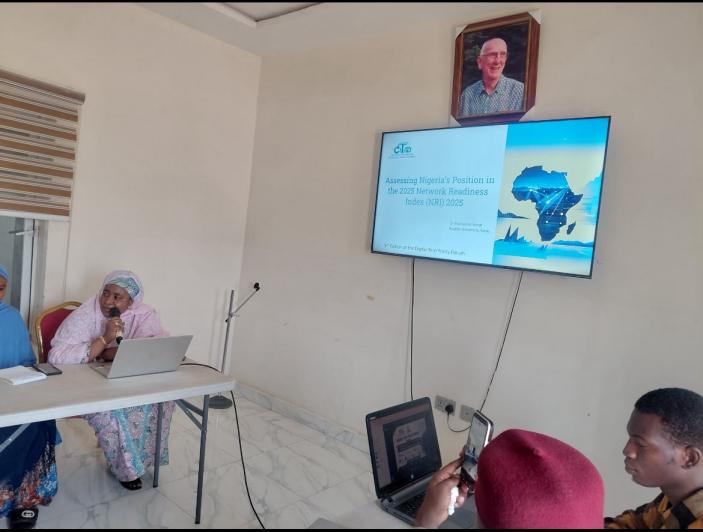
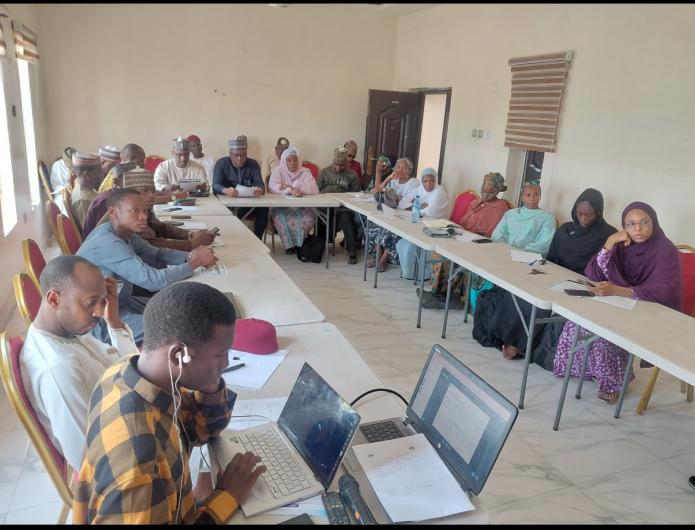
Pictures from the Forum