
|
Getting your Trinity Audio player ready...
|
Venue: Ningi Local Government Area, Bauchi State
Date: 16 April 2026
Time: 10:00 AM – 2:00 PM
Overview
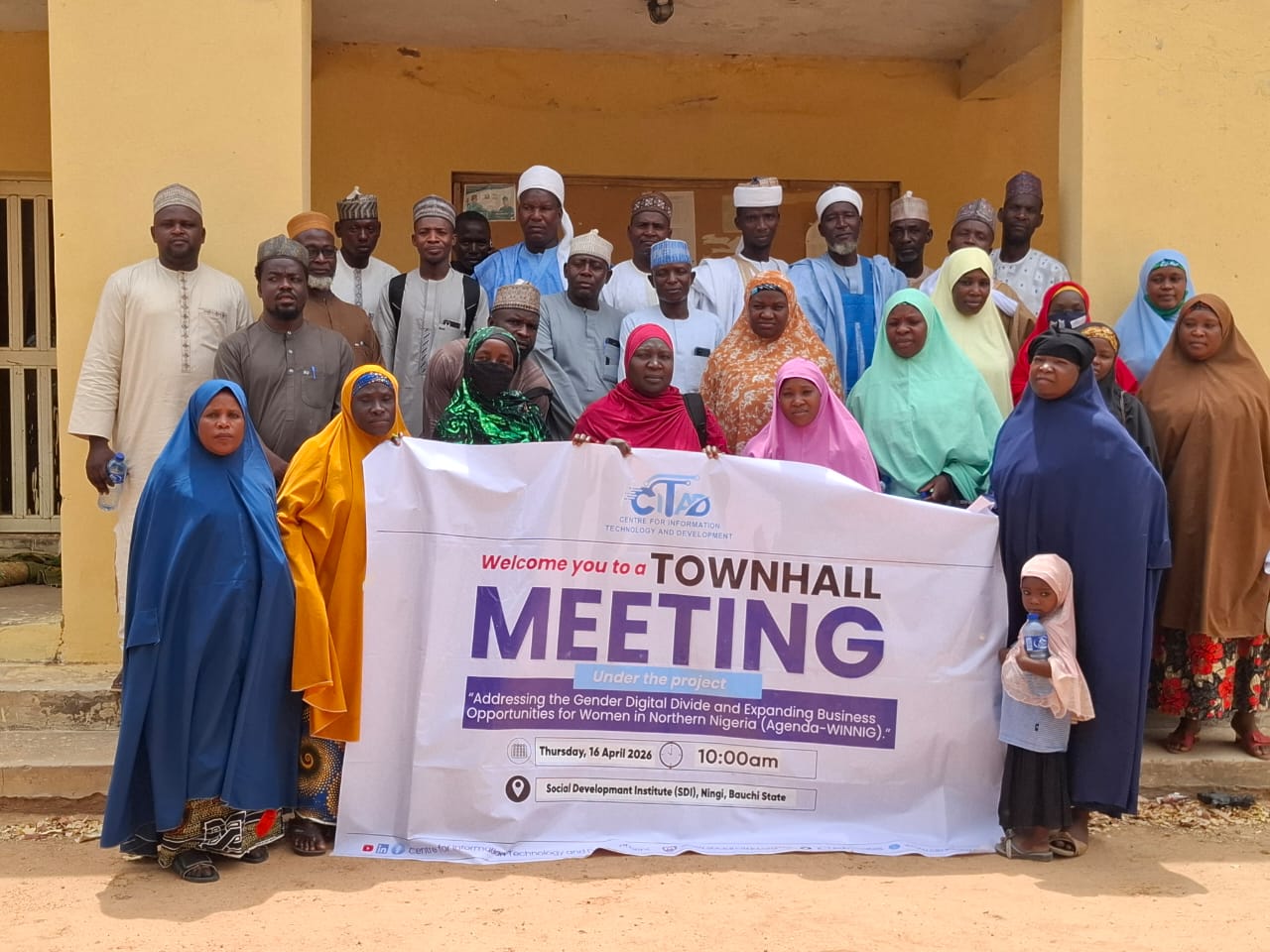
Following the Bauchi engagement, the Centre for Information Technology and Development (CITAD), through its AGENDA-WINNIG Project, convened a town hall meeting in Ningi LGA to deepen stakeholder engagement on gender digital inclusion.
The meeting brought together traditional rulers, religious leaders, education stakeholders, community representatives, and other relevant actors.
The session aimed to examine context-specific barriers affecting women and girls’ access to digital opportunities, while fostering collaboration and community ownership for sustainable implementation.
The meeting commenced with participant registration, introductions, and opening remarks, creating an inclusive and participatory environment for dialogue.
Opening remarks emphasized the importance of addressing the gender digital divide and ensuring inclusive access to digital tools and opportunities.
Stakeholders expressed appreciation for the initiative and acknowledged its relevance in improving digital literacy, economic participation, and community development.
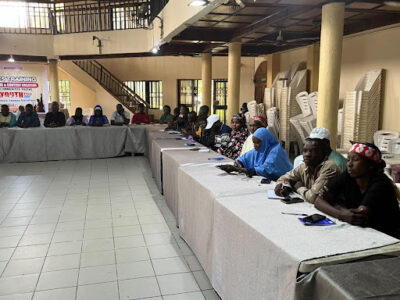
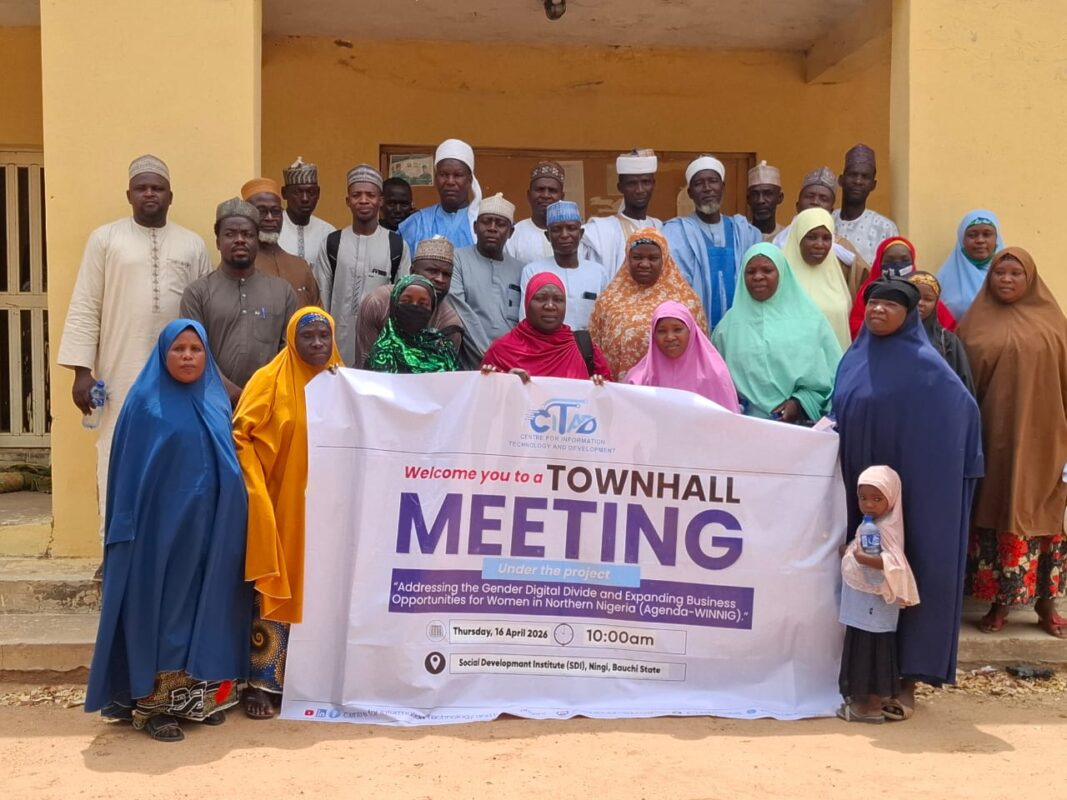
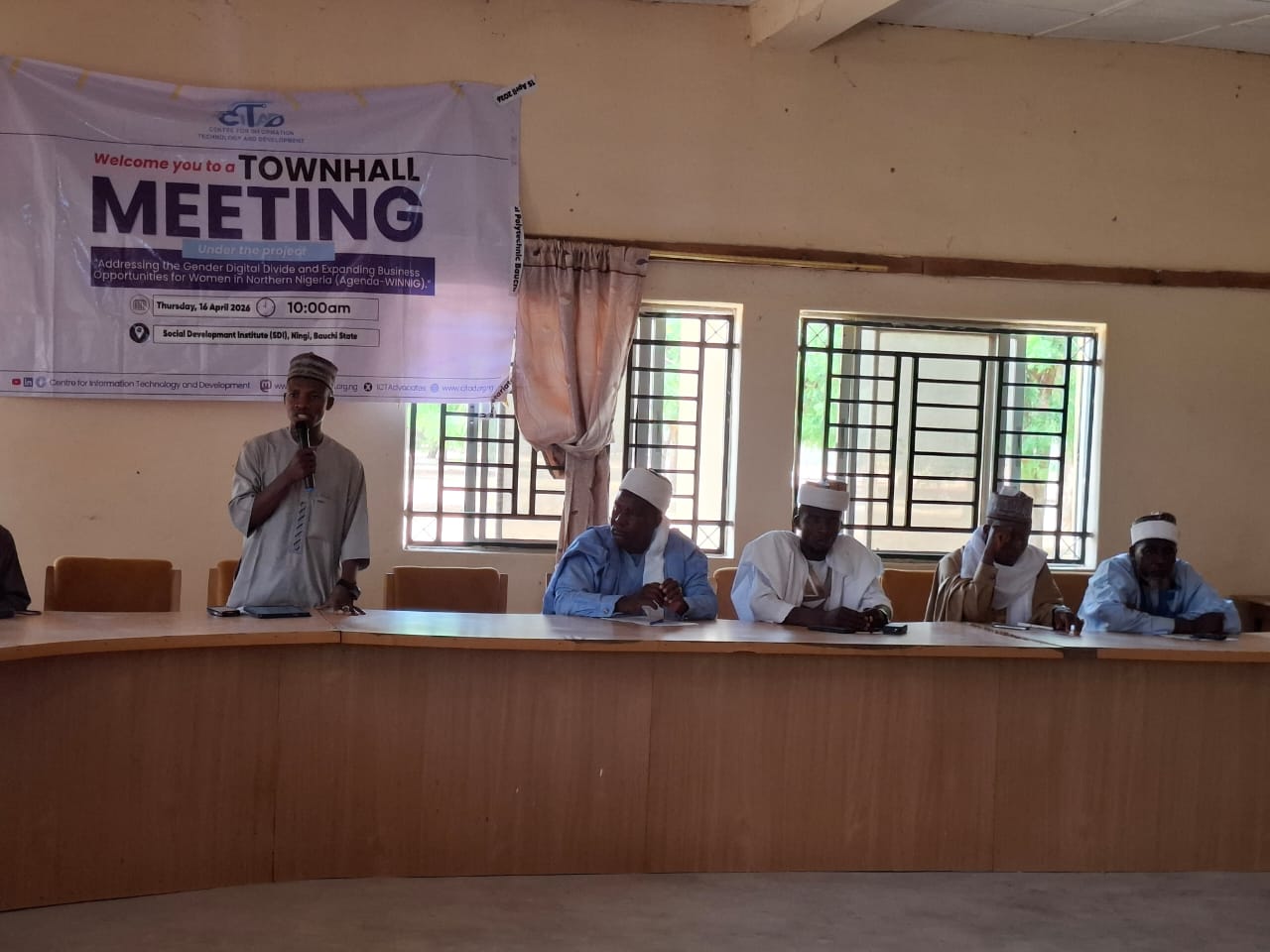
A cross-section of stakeholders sharing insights during the town hall discussion in Ningi
AGENDA-WINNIG Project Overview
The Project Lead provided an overview of the AGENDA-WINNIG Project, outlining its focus on bridging the gender digital divide through: Digital Literacy and Capacity Building, Digital Hygiene and Responsible Usage and Community Engagement and Sustainability Mechanisms. The project emphasizes safe, inclusive, and community-driven approaches to digital empowerment.
Stakeholder Perspectives
Community and Traditional Leadership; Traditional leaders expressed cautious support for digital inclusion, highlighting concerns about cultural preservation and the potential negative influence of technology if not properly managed. They emphasized the need for a balanced approach that promotes access while ensuring strong parental guidance and community oversight.
Education and Institutional Insights; Education stakeholders shared examples of progress, noting that in some communities, such as Kafin Madaki, students are already using computers for examinations with community support. However, concerns were raised about neglected ICT infrastructure, including abandoned or vandalized facilities, which limit access and sustainability.
Religious and Ethical Perspectives; Religious leaders shared the importance of ethical and responsible use of digital tools. They emphasized that while digital skills can create economic opportunities, misuse could undermine societal values. They called for stronger involvement of religious institutions in guiding young people on responsible digital behavior.
Gender and Social Considerations; Participants highlighted the complexity of educational and digital access dynamics within communities. While girls were observed to be more present in basic education settings in some areas, broader participation in digital and economic opportunities remains uneven. Stakeholders also emphasized the need to ensure inclusivity across different groups and communities.
Key Issues Identified
Participants identified several challenges affecting digital inclusion:
- Cultural resistance to digital adoption
- Fear of misuse of technology
- Dilapidated ICT infrastructure
- Theft and vandalism of ICT equipment
- Weak sustainability mechanisms
Partnership Pathways and Co-Creation of Solutions
Stakeholders proposed practical solutions, including:
- Strengthening community monitoring and protection of ICT facilities
- Promoting parental guidance and digital responsibility
- Expanding access to include out-of-school children
- Leveraging traditional and religious institutions for awareness and mobilization
- Enhancing community ownership of digital initiatives
Stakeholders expressed commitment to supporting implementation and ensuring sustained engagement.
Outcomes
The meeting resulted in; Increased awareness of gender digital inclusion challenges, Strong community commitment and stakeholder buy-in, Improved collaboration among key actors and Identification of practical and scalable solutions
Challenges and Observations
Despite positive engagement, several constraints were noted infrastructure gaps limiting access to digital tools, cultural barriers affecting adoption, limited financial and technical resources and security concerns, including theft and vandalism
Identification of scalable solutions
Conclusion
The Ningi town hall meeting reinforced the importance of community-driven approaches to addressing the gender digital divide.
The level of engagement and stakeholder commitment demonstrated readiness for implementation and highlighted the need for sustained collaboration across sectors.
To strengthen gender digital inclusion efforts, stakeholders recommended: Improving ICT infrastructure and maintenance systems, Strengthening community ownership and accountability, Promoting digital safety and responsible usage, Engaging religious and traditional leaders in advocacy efforts and Expanding access to underserved and vulnerable groups
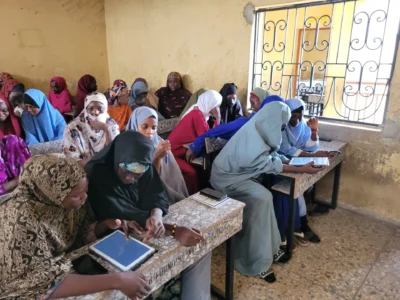
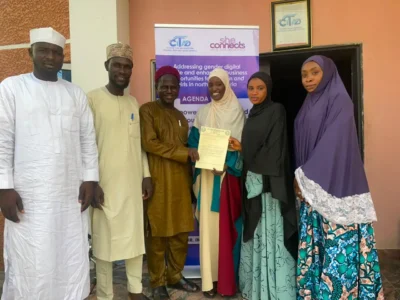
Women participants actively sharing insights during the town hall discussion in Ningi, Bauchi Central Senatorial Zone.