
|
Getting your Trinity Audio player ready...
|
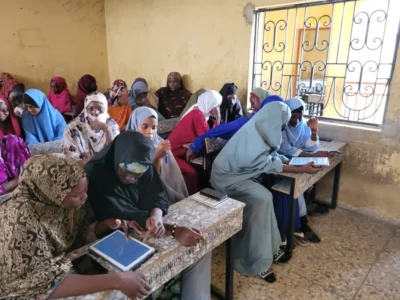
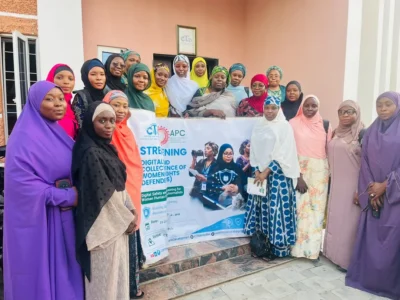
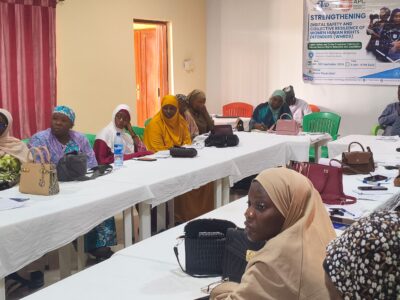
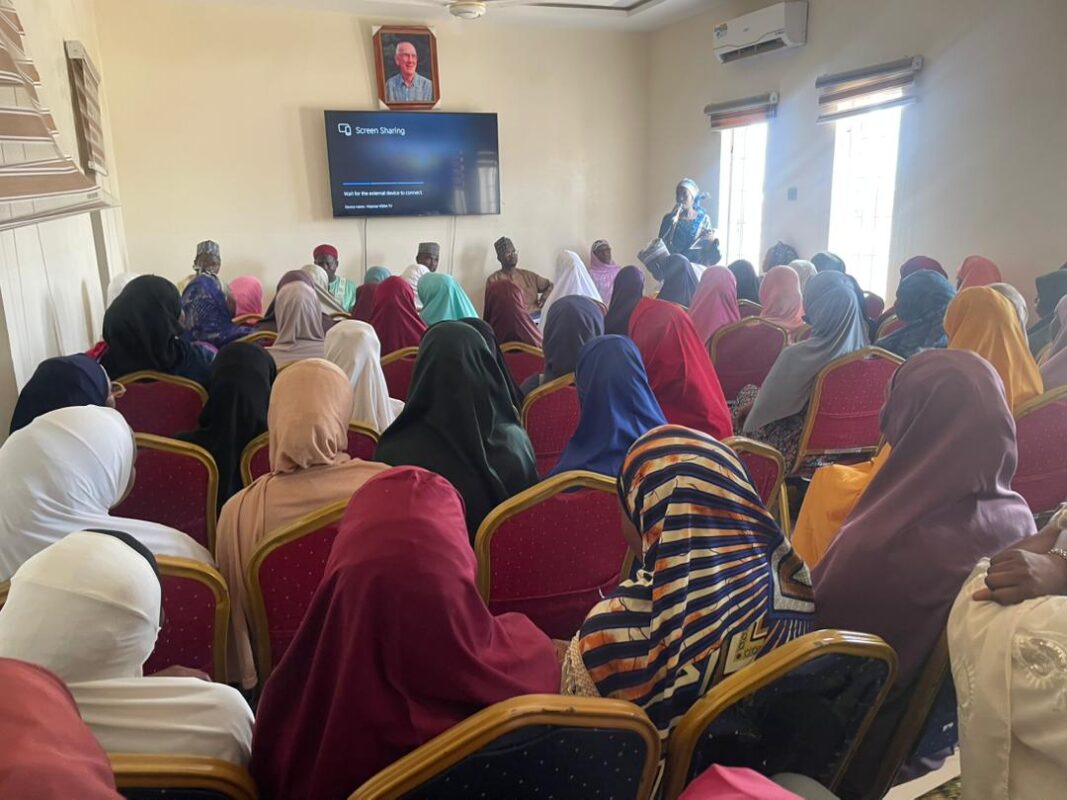
The Centre for Information Technology and Development CITAD formally commenced the Digital Literacy, Safety and Hygiene Skills Training under the project titled Addressing the Gender Digital Divide and Expanding Business Opportunities for Women in Northern Nigeria (AGENDA-WINNIG) on 19th May 2026 at Bjorn Beckman Hall.
The event brought together 108 participant
s drawn from different communities and institutions across Kano State. Representatives from key government agencies and educational institutions attended the ceremony to deliver goodwill messages and encourage participants to actively engage in the training. Stakeholders present included representatives from the Kano State Senior Secondary Schools
Management Board (KSSSMB), the Qur’anic and Islamiyya Schools Board, the Kano State Ministry of Education, the Science and Technical Schools Board, the Ministry.
The training, which continues on 20th and 21st May 2026, is designed to equip women and girls with practical digital literacy skills, online safety knowledge, and digital hygiene awareness to enhance their educational, social, and economic opportunities.
Speaking during the formal commencement ceremony, the Executive Director of Centre for Information Technology and Development, represented by  Senior Programme Officer Isah Garba, welcomed participants and special guests while emphasizing the importance of digital literacy in today’s world. He noted that empowering women and girls with digital skills is essential for inclusive development and improved economic participation in Northern Nigeria.
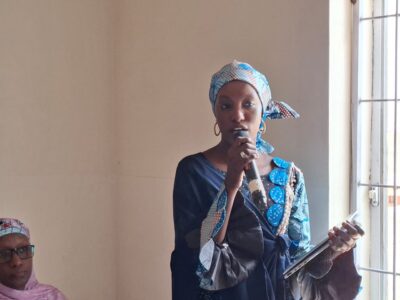 Fatima Babakura, Project manager while presenting the project overview, explained that the AGENDA-WINNIG Project is an 18-month initiative being implemented across Kano and Bauchi States. According to her, the project consists of several training components aimed at bridging the gender digital divide and expanding opportunities for women and girls.
She explained that under the Digital Literacy component, the project is conducting UTME/JAMB-focused computer training targeting Senior Secondary School (SS3) students. The project aims to train 5,000 SS3 students, including 1,500 students in Kano and 1,000 students in Bauchi during the current phase, with continuation planned for women and girls who lack computer literacy skills. Overall, the digital literacy component targets 15,000 beneficiaries.
The broader target groups include girls in secondary schools, girls who did not complete secondary education or access higher education, as well as women and girls who have either completed or discontinued their education. Participants are generally between the ages of 16 and 40 years.
On the Safety and Digital Hygiene component, also known as Na’ura Tsaftatacciya – Safe Digital Space, she stated that the initiative targets 15,000 participants and focuses on equipping beneficiaries with the skills required to stay safe, responsible, and confident online. Basic literacy is required for participation in the training.
Delivering a goodwill message on behalf of the Executive Secretary of the Kano State Senior Secondary Schools Management Board (KSSSMB), Director of ICT,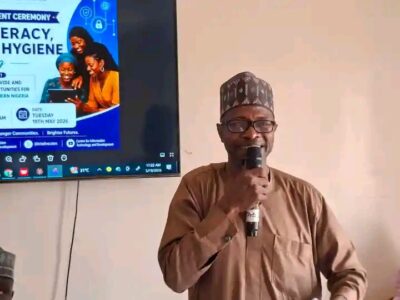 Isyaku Garba, appreciated Centre for Information Technology and Development for its continued efforts in equipping women and girls with digital knowledge and skills. He encouraged participants to make effective use of the opportunity provided through the training.
A paper presentation was delivered by 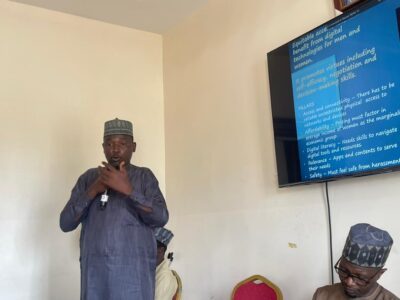 Dr. Adamu Kawu Sule of the Department of Sociology, Bayero University Kano, on the topic “Challenges of Gender Digital Inclusion and the Role of Partners in Addressing Them.”
In his presentation, Dr. Sule highlighted that Northwestern Nigeria experiences one of the widest gender digital gaps in the country, noting that while approximately 45% of men in the region use the internet, only 28% of women have access to it. He explained that the digital divide goes beyond affordability and infrastructure challenges, stressing that women’s access to mobile phones, Internet services, and digital training is often influenced by family and community decision-making structures.
The presentation identified five major pillars necessary for achieving gender digital inclusion: access and connectivity, affordability, digital literacy, relevance of digital content, and protection from online harassment and gender-based violence.
Dr. Sule further discussed major barriers affecting women’s digital participation, including the high cost of smartphones and internet services, weak rural network coverage, low literacy levels among women, language barriers, restrictive social norms, and online safety concerns. He emphasized that many digital training materials remain inaccessible because they are mostly available in English rather than local languages.
He also stressed the importance of partnerships in addressing the challenges of gender digital exclusion. According to him, government institutions, private sector organizations, NGOs, CSOs, traditional institutions, and religious leaders all have important roles to play in improving women’s access to digital opportunities.
The paper recommended the adoption of Hausa-language digital learning standards, the establishment of women-led digital hubs in rural communities, improved reporting systems for online abuse in local languages, partnerships with telecom and fintech companies to support affordable devices, and stronger links between digital skills training and economic opportunities.
Muhammad Bello Yahaya later provided a breakdown of the training modules to participants and stakeholders. He explained that the training consists of three major modules: Digital Literacy, Online Safety and Digital Hygiene, and Unified Tertiary Matriculation Examination (UTME/JAMB) preparation. According to him, each module contains several sub-topics designed to provide participants with practical and relevant knowledge throughout the training period.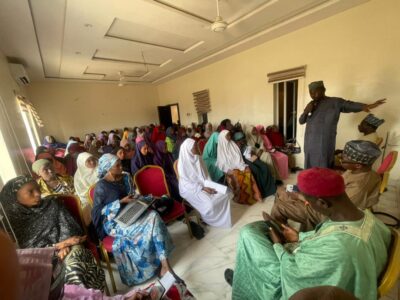
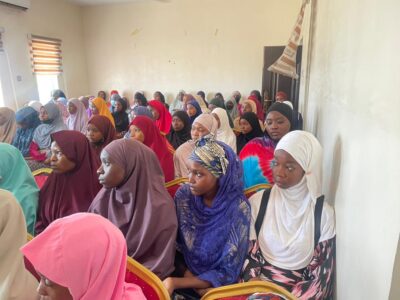
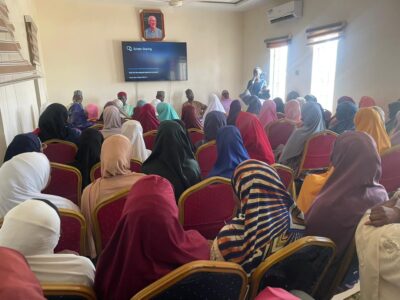
Stakeholders at the event expressed their commitment to supporting the successful implementation of the project. Speaking on behalf of the Kano State Ministry of Education, Sadiya Zakari advised that government-owned schools equipped with computer facilities should be utilized for community-level training to improve accessibility for participants.
Similarly, Salisu Abba from the Science and Technical Schools Board reaffirmed the Board’s readiness to continue supporting on initiatives related to digital technology and capacity building.
In his closing remarks, CITAD’s Muhammad Bello Yahaya appreciated all stakeholders, partners, facilitators, and participants for their support and active participation. He called for sustained collaboration and cooperation to ensure the successful implementation of the AGENDA-WINNIG Project from inception to completion.