
Townhall Meeting on Gender Digital Inclusion: Addressing the Gender Digital Divide and Expanding Business Opportunities for Women in Northern Nigeria (AGENDA-WINNIG)
Venue: Rano, Kano South.
Date: 31 March 2026
Time: 10:00 AM – 2:00 Pm
Overview
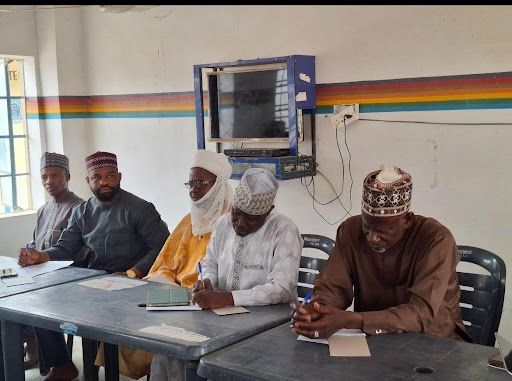
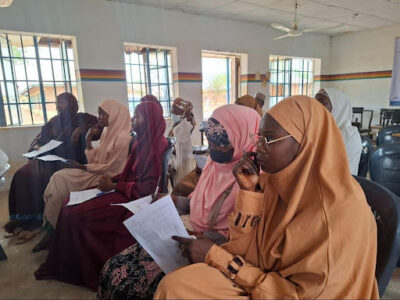
Through its AGENDA-WINNIG Project, a town hall meeting was convened in Kano South to engage key stakeholders on advancing digital inclusion, safer online spaces, and women’s economic empowerment in Northern Nigeria. The meeting brought together government officials, education leaders, community and religious representatives, women and girls’ groups, NGOs, and development partners.
The session provided a platform to discuss the gender digital divide, highlight existing gaps, and explore partnership opportunities to support women’s access to digital technology. The meeting is conducted across three senatorial districts in Kano (Kano South, Kano North, and Kano Central) and similarly in Bauchi State across Ningi, Bauchi, and Jama’are senatorial districts.
Registration and Opening
The event began with participant registration and informal networking from 9:30 to 10:00 AM, providing an opportunity for early engagement. A volunteer led the opening prayer, followed by self-introductions from participants and members of the AGENDA-WINNIG Project team. These activities set a collaborative tone and established a shared sense of purpose among attendees.
Welcome Remarks and Goodwill Messages by Kamal Garba
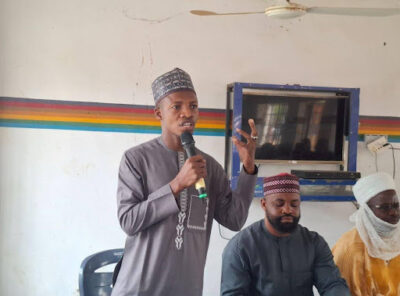
Kamal Garba, representing the Center for Information Technology and Development (CITAD), delivered the welcome remarks. He highlighted the purpose of the project, noting that while digital technology has become widely available, women are often left behind due to cultural restrictions, fear of online harassment, and cyberbullying. He emphasized that the AGENDA-WINNIG Project aims to raise awareness and train women on safe internet usage, digital literacy, and online entrepreneurship.
Goodwill messages were delivered by key stakeholders, including the Education Director, Education Secretary, District Head, Imam, and NUT Chairman. They welcomed the project and appreciated CITAD’s efforts in bringing such an initiative to the community. They noted the importance of the project, especially in light of challenges faced in the previous year where many students were unable to perform well in JAMB due to non-functional CBT centers.

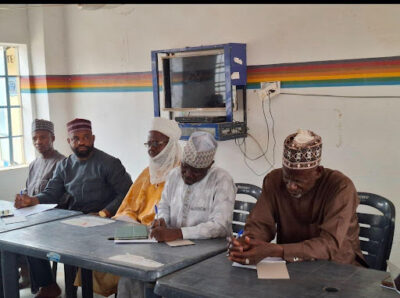
They also emphasized that women and girls are left behind in technology, and with the right digital skills, they would be able to conduct their businesses online without limitations.
AGENDA-WINNIG Project Overview Fatima Babakura
Fatima Babakura, Project Manager, provided an overview of the AGENDA-WINNIG Project. The project focuses on bridging the gender digital divide in Northern Nigeria, this project will be conducted in two State Kano and Bauchi. Women and girls face barriers such as limited digital skills, economic constraints, cultural restrictions, and online safety concerns.
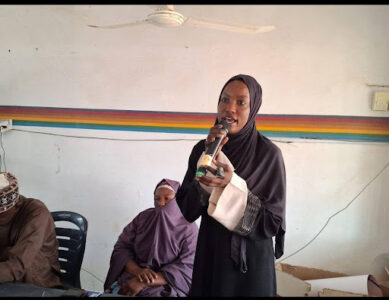
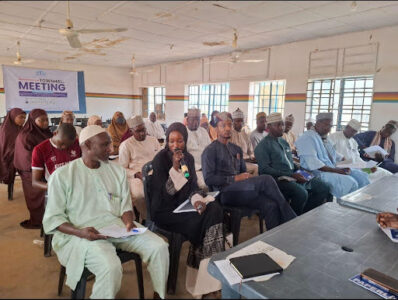
The project seeks to empower women by improving digital literacy, online safety, and entrepreneurship skills while addressing social and structural barriers to technology use.
The project’s approach includes:
Training and Capacity Building: Digital literacy, UTME Training, online safety, and training of trainers for staff and volunteers.
Advocacy and Public Education: Engagement with government actors, community leaders, parents, and men through town hall meetings, role model forums, and radio programs.
Stakeholder Engagement and Partnerships: Collaboration with government agencies, women-focused organizations, and community groups for sustainability and broader reach.
Additional initiatives include business clinics, innovation fairs, employer forums, virtual market onboarding, surveys, experience-sharing sessions, and documentation to support scaling.
Stakeholders perspective
Several stakeholders gave their recommendation and issues in terms of addressing the issue of gender digital divide. Some of which include;


- Encouragement is needed on the use of the internet, especially through online media, to support business activities.
- Awareness should be created on parental guidance to ensure that children are properly guided in their use of digital tools.
- Some women face societal challenges when using smartphones.
- Trainings like the one mentioned, supported by CITAD, would help reduce the digital gap.
- Awareness creation is very important.
- Many women are afraid of using social media due to the misuse of the internet by some individuals, who use it to attack others, especially women. This has created significant challenges for them.
- Fear of how the community perceives women online discourages many women from my using social media.
- There is a need for ICT centers in our community, Kibiya.
- Parents need more encouragement to allow their children to use mobile phones responsibly.
- Parents can also monitor and track their children’s phone usage.
Partnership Pathways
John Otaro presented the Partnership Pathways framework, outlining how stakeholders collaborate to bridge the gender digital divide and expand business opportunities for women.

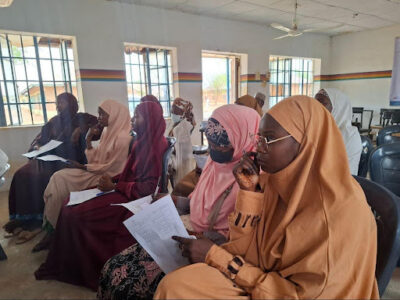
Government and education officials provide policy support and institutional backing, while community and religious leaders mobilize and build trust within communities. Women and girls’ groups actively participate and advocate within their networks, and NGOs and development partners provide technical expertise, and monitoring support.
Collaboration focuses on digital literacy, community mobilization, gender-responsive learning environments, and economic opportunities for women. Commitments are formalized through pledges, supported by a Community Partnership Committee and quarterly review meetings.
Stakeholders assured their cooperation and support for the project, having understood its importance and objectives. The NUT Chairman noted that computer-based testing will, in the near future, become standard practice in schools. He considered it timely that the project seeks to educate women on how to navigate such skills, urging all to view it as a step in the right direction toward promoting digital literacy among women and girls.
Stakeholders further recommended increased awareness for parents to support their children’s participation in Computer-Based Test (CBT) training and digital literacy programs. They also called for collaboration with government to update the educational curriculum to include more digital literacy components.
Participant Experiences

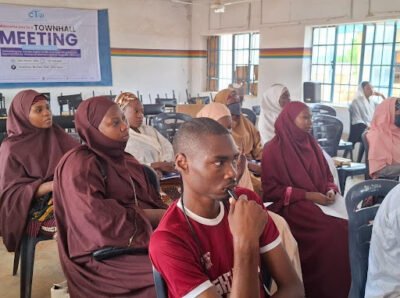
Participants shared experiences demonstrating the impact of digital skills training. In communities such as Kibiya, students and teachers increasingly rely on the internet for assignments, projects, and computer-based examinations.
Women who received training reported applying skills in areas such as graphic design, video production, and online business, leading to improved economic participation. Participants emphasized the need for continued engagement to educate parents and communities about digital opportunities.
Challenges and Observations
Participants highlighted several challenges affecting women’s digital inclusion. From birth, many women are under parental control, and after marriage, under spousal control, which limits their independence in accessing digital opportunities within cultural and religious contexts.
There is a need for stronger collaboration between CITAD, government institutions, and ministries of education at both federal and state levels to integrate digital literacy into school curricula from primary education.
Teachers also require practical ICT training, as many currently have only theoretical knowledge, which affects effective teaching. In many schools, computer studies remain theoretical without practical application.
Additional challenges include:
Limited access to devices, internet data, and training opportunities
Cultural and parental restrictions on women’s participation
Poor infrastructure, including unstable internet and insufficient ICT centers
Low levels of digital literacy, even among educated individuals
These challenges highlight the need for sustained training, awareness, infrastructure development, and community engagement.
Gender Digital Divide in Nigeria By Buhari Abba
Nigeria remains a mobile-first digital market; however, access remains uneven. As of 2023, only about 39% of Nigerians use the internet, with women disproportionately affected by social, economic, and cultural barriers.
Factors such as affordability, digital literacy, infrastructure gaps, and unreliable electricity continue to limit access. T he gender digital divide contributes to economic exclusion, limited educational opportunities, reduced political participation, and inequality in access to information.
Addressing this gap requires targeted interventions, including digital literacy programs, infrastructure expansion, policy reforms, and community sensitization.
Recommendations
To advance gender digital inclusion, the following measures were highlighted:
Promote digital literacy among women and girls and integrate it into school curricula
Improve affordability through reduced data costs and subsidized internet access
Expand infrastructure, particularly in rural areas
Encourage inclusive and gender-sensitive ICT policies
Address cultural barriers through awareness and community engagement
Update educational curricula to include practical computer and digital literacy training
Stakeholder Roles and Collaboration Framework
Government and Education Officials
Serve as policy enablers and institutional anchors by providing official support, access to schools, and policy backing.
Community and Religious Leaders
Act as trust builders and social mobilizers by promoting acceptance, addressing misconceptions, and encouraging community participation.
Women and Girls’ Groups
Serve as primary beneficiaries and advocates by actively participating, sharing experiences, and promoting the program within their networks.
NGOs and Development Partners
Provide technical and resource support through expertise, funding, implementation, and monitoring.
Key Areas of Collaboration
Collaboration focuses on digital literacy training, community mobilization, safe learning environments, business linkages, monitoring and accountability, and policy advocacy for sustainability.
Coordination Mechanisms
Partners formalize commitments through MoUs or pledges, establish a Community Partnership Committee, conduct joint planning sessions, implement shared reporting systems, and maintain community feedback loops to guide program improvements.
Stakeholder Discussion
Stakeholders observed that many similar projects often fail to achieve lasting impact due to weak monitoring and evaluation systems. It was noted that CITAD has established monitoring and evaluation mechanisms for its trainings and activities, ensuring accountability and effectiveness.
The session concluded with an open community dialogue, allowing participants to share experiences and jointly develop practical solutions across stakeholder groups.