
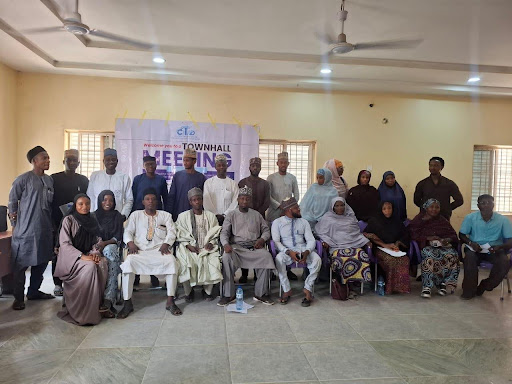
Townhall Meeting on Gender Digital Inclusion: Addressing the Gender Digital Divide and Expanding Business Opportunities for Women in Northern Nigeria (AGENDA-WINNIG)
Venue: Zaitun Foundation Hall, Kano Municipal, Kano Central
Date: 2nd March 2026
Time: 10:00 AM – 2:00 PM
Introduction
The Townhall Meeting commenced with an opening prayer led by a volunteer, followed by participants’ self-introductions.
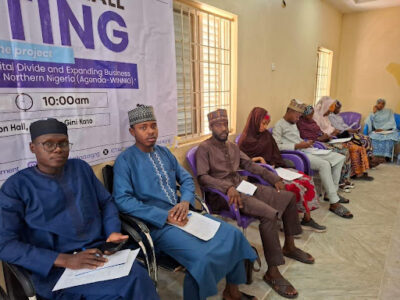
The meeting brought together Civil Society Organizations (CSOs), Community-Based Organizations (CBOs), government officials, education leaders, community and religious representatives, women and girls’ groups, NGOs, and development partners. It provided a platform to discuss the gender digital divide, highlight existing gaps, and explore partnership opportunities to support women’s access to digital technology.
This stakeholders meeting will be conducted in three senatorial District Kano Central, kano South, kano North likewise in Bauchi
The session concluded with an open floor discussion on how to effectively implement the project
Welcome Remarks
The welcome remarks were delivered by Kamal Garba, representing the Director of the Centre for Information Technology and Development (CITAD), Y. Z. Ya’u.
He set the tone for collaboration and shared ownership, providing background on the project, its aims, and objectives He emphasized that the project seeks to train women and girls on how to effectively use computers and mobile phones. He noted that while the world is increasingly digital, many women are left behind. Although many women own smartphones, they often lack the skills to use them productively for income generation, instead using them mainly for entertainment such as watching movies or reading novels.
He further explained that many women fear social media due to cyberbullying. The project aims to address these fears by creating awareness, guiding women on safe internet use, and showing how digital tools can generate income.
He also highlighted ongoing training for SS3 students preparing for UTME, noting that many students fail exams not due to lack of knowledge but because they lack computer skills. The training is currently being implemented in Kano and Bauchi States across schools and communities.
Project Overview Presentation
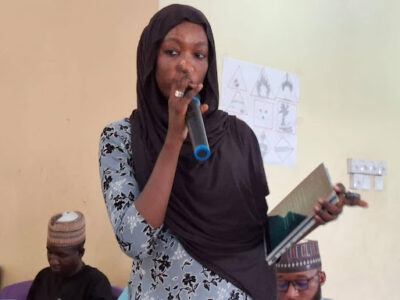
Fatima Babakura, Project Manager, delivered a presentation on the AGENDA-WINNIG project, providing context and highlighting partnership opportunities.
The project is and 18 months project will be implemented in Kano and Bauchi States in Northern Nigeria and includes several training programs:
Under Digital Literacy we are conducting UTME training This component targets SS3 students The project aims to train 5,000 SS3 students (1,500 in Kano and 1,000 in Bauchi this year, with continuation planned for the women and girls who are not computer literate. ). But digital literacy training target number is 15,000
The broader target groups include:
- Girls in secondary schools
- Girls who have not completed secondary school and have not accessed higher education
- Women and girls who have completed or discontinued education
- Participants are typically between the ages of 16–40.
- Safety and Digital Hygiene (Naura Tsaftaceciya – Safe Digital Space)
- This targets 15,000 participants. It focuses on equipping participants with digital skills and ensuring they are safe and confident online. Basic literacy is required for participation.
Training of Trainers (TOT) for Partners
This targets women aged 30–40 who are staff, volunteers, and associates of partner organizations. A six-month TOT training has already commenced in Kano and Bauchi.
Stakeholder Engagement Activities
Beyond direct training, the project includes engagement with stakeholders to ensure sustainability and continuity:
- Engagement with state-level partners (2 meetings per state)
- Engagement with federal-level partners
- Community engagement through townhall meetings (6 per state)
- Public education and enlightenment
- Role Model Forums (one per state every six months)
- Celebration of Girls in ICT Day in each state capital with radio programs
- Data Privacy Protection Day in each state capital
- Economic Empowerment and Opportunities
To create employment opportunities for trained women and girls, the project will implement:
Linkages and Facilitations
- Business Clinics: One-day events connecting participants with regulatory and support organizations (twice per state)
- Creativity and Innovation Fair: Showcasing digital skills and innovations (once per state)
- Private Sector/Employers Forum: Connecting women’s digital skills to employers
- Virtual Market Space: Supporting women entrepreneurs to market products and services online
Survey and Publications
The project will also include research and documentation activities:
- Production of policy briefs (three policies, 1,000 copies each)
- Survey of public digital literacy training facilities (baseline, midline, endline)
- Beneficiary tracer surveys (every six months) for M&E
- Profiling of high-impact beneficiaries
Goodwill Messages
Goodwill messages were delivered by representatives of key stakeholders, including:
Representative of the Education Secretary (Malam Salisu Uba Kwalli, Head of School Services)
Representative of the NUT Chairman (Malam Auwalu, Head Teacher, Dan Agundi)
They appreciated the initiative and expressed strong support, noting that the project aligns with government priorities. They emphasized that empowering women through knowledge benefits the entire nation and pledged collaboration throughout implementation.
Stakeholders’ Perspectives
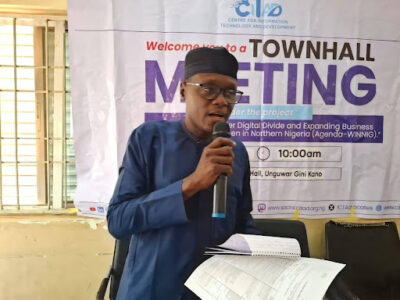
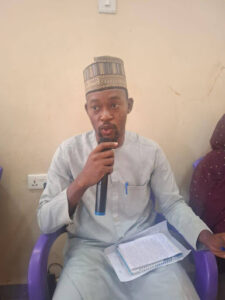
Stakeholders highlighted several realities and challenges:
- Many community ICT centers are underutilized or non-functional
- Teachers require orientation and ICT capacity building
- A previous survey showed high phone usage among women at night, often for non-productive activities
- Increased awareness could help women use phones for income generation
- Stakeholders committed to creating awareness in their communities and emphasized collective responsibility beyond CITAD and government.
- Excessive chatting among students in Girls’ High School, limiting productive digital engagement.
- Limited awareness and skills among women on how to effectively use digital platforms for entrepreneurship and resource access.
- Fear among women of being online and lack of knowledge on how to access funding opportunities.
- ICT centres are not fully accessible to all, leading to exclusion.
- Available digital facilities (computers, tablets, laptops) at Kwalli Special Primary School are not fully utilized.
They also recommended:
- Expanding training to upper basic schools
- Providing ICT training for teachers
- Extending programs to rural areas
- Strengthening collaboration with government
- Raising awareness among parents, especially those restricting girls’ access to phones
- Strengthen the role of the Girl Child Centre as a government-owned platform for promoting entrepreneurship among girls.
- Promote inclusive policies to ensure ICT centres are accessible to all, so that no one is left behind.
- Leverage the Women City Centre under the Agency for Mass Education as a strategic hub for partnerships to promote women’s digital inclusion.
- Train and support women on how to effectively utilize digital platforms for entrepreneurship, access resources, and stay safe from digital harm.
- Provide guidance to women on accessing funding opportunities and overcoming the fear of being online.
- Strengthen entrepreneurship training in Government Upper Basic schools and provide certificates upon completion.
- Introduce entrepreneurship and digital skills training at the primary school level, especially from age 11.
Understanding the Gender Digital Divide
Buhari Abba highlighted the local context of the gender digital divide:
Nigeria is a mobile-first digital market, yet access remains unequal
As of 2023, about 39% of Nigerians use the internet, with women disproportionately affected
Barriers include affordability, infrastructure, literacy, and socio-cultural factors
Rising data costs and limited electricity worsen the situation
The digital gap leads to:
- Economic exclusion
- Educational disadvantages
- Limited political participation
- Information inequality
Addressing this requires targeted programs, policy reforms, infrastructure development, and community sensitization.
General Discussion
Key issues raised during discussions include:
- Cultural barriers and parental restrictions
- The need to involve religious and traditional leaders to influence acceptance
- Introduction of parental control applications to address safety concerns
- Low motivation for women participation unless incentives are provided
- Negative perceptions of mobile phones among parents and elders
- Participants emphasized the need for continuous awareness for both youth and elders.
Partnership Pathways
John Otaro presented the Partnership Pathways framework, outlining how stakeholders collaborate to bridge the gender digital divide and expand business opportunities for women.
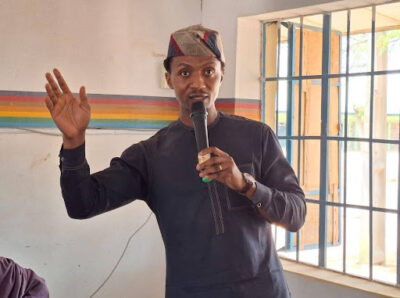
Government and education officials provide policy support and institutional backing, while community and religious leaders mobilize and build trust within communities. Women and girls’ groups actively participate and advocate within their networks, and NGOs and development partners provide technical expertise, and monitoring support.
Collaboration focuses on digital literacy, community mobilization, gender-responsive learning environments, and economic opportunities for women. Commitments are formalized through pledges, supported by a Community Partnership Committee and quarterly review meetings.
Stakeholders assured their cooperation and support for the project, having understood its importance and objectives. The NUT Chairman noted that computer-based testing will, in the near future, become standard practice in schools. He considered it timely that the project seeks to educate women on how to navigate such skills, urging all to view it as a step in the right direction toward promoting digital literacy among women and girls.
Stakeholders further recommended increased awareness for parents to support their children’s participation in Computer-Based Test (CBT) training and digital literacy programs. They also called for collaboration with government to update the educational curriculum to include more digital literacy components.
Stakeholder Groups
- Government & Education Officials
- Community & Religious Leaders
- Women & Girls Groups
- NGOs & Development Partners
Roles and Contributions for stakeholders
- Government: Policy support and institutional backing
- Community Leaders: Build trust and mobilize communities
- Women & Girls: Active participation and advocacy
- NGOs: Technical support, funding, and monitoring
Key Collaboration Areas
- Digital skills training
- Community mobilisation
- Safe learning environments
- Business linkages
- Monitoring and accountability
- Policy advocacy
- Coordination Approach
- Formal agreements (MoUs)
- Community Partnership Committee
- Quarterly planning meetings
- Shared monitoring systems
- Community feedback mechanisms
- Community Dialogue and Stakeholder Contributions
Participants emphasized:
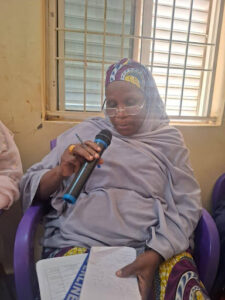
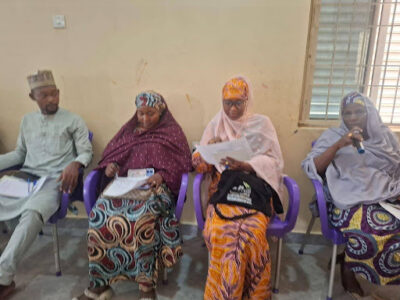
- The importance of including traditional and religious leaders
- Expanding training to younger students
- Providing practical skills such as photography for online businesses
- Reviving non-functional ICT centers, especially for women
- Encouraging schools to utilize existing ICT facilities
- Including persons with disabilities in the project
- CITAD responded by noting the availability of a disability hall and facilities, along with a PWD officer to support inclusive training.
Monitoring and Evaluation
Stakeholders noted that many similar projects fail due to weak monitoring and evaluation. CITAD assured participants that strong monitoring and evaluation mechanisms are already in place for all project activities.
Conclusion
The townhall meeting provided a platform for stakeholders to share experiences, identify challenges, and co-create practical solutions. It reinforced the importance of collaboration, community involvement, and sustained efforts in bridging the gender digital divide and expanding opportunities for women and girls in Northern Nigeria.