

|
Getting your Trinity Audio player ready...
|
REPORT OF THE WOMEN INTERNET GOVERNANCE FORUM (WIGF) 2025 ORGANIZED BY THE CENTRE FOR INFORMATION TECHNOLOGY AND DEVELOPMENT IN PARTNERSHIP WITH NIGERIA INTERNET GOVERNANCE FORUM
Theme: From Vision to Visibility – Advancing Women’s Leadership in Digital Governance
Date: 25th November, 2025
Venue: Online
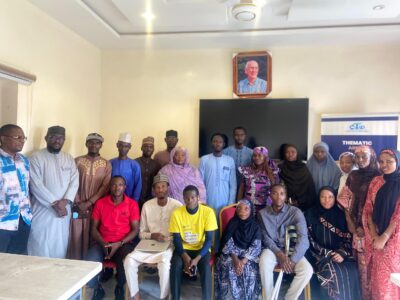
The Centre for Information Technology and Development (CITAD) in partnership with Nigeria Internet Governance Forum (NIGF) held the 2025 Women Internet Governance Forum (WIGF25), an important platform dedicated to promoting women’s participation, visibility, and leadership in digital governance. The forum brought together a diverse group of women leaders, academics, policymakers, technology professionals, digital rights advocates, and innovators who share a collective commitment to ensuring that women play a central role in shaping Nigeria’s and Africa’s digital future. The aim of this year’s WIGF was to promote, strengthen, and amplify women’s leadership, participation, and visibility in digital governance at local, national, and global levels.
This year’s forum provided a space for critical reflection on persistent gender disparities within the digital governance ecosystem. Participants examined structural challenges, cultural barriers, and existing gaps in representation while identifying practical strategies to increase women’s participation across all levels of ICT policy and leadership. Through rich discussions and shared experiences, the event underscored that the future of digital governance must be inclusive, equitable, and reflective of the voices of women, who constitute a significant portion of digital technology users.
In his welcome remarks, the Executive Director of CITAD, YZ Ya’u emphasized the ongoing gender imbalance within Nigeria’s ICT governance and leadership structures. He noted that despite various advocacy efforts and policy interventions, women remain significantly underrepresented in agencies that shape Nigeria’s digital ecosystem. Referring to a research conducted By CITAD, HE highlighted that women currently hold only about 15% of leadership roles across key ICT institutions such as the Nigerian Communications Commission (NCC), National Information Technology Development Agency (NITDA), NigComSat, and the Nigeria Data Protection Commission—a figure far below the 35% benchmark set by the National Gender Policy.
In her remarks, the chair of this year’s WIGF, Madam Mary Uduma, Chair West African Internet Governance Forum stressed that improving women’s visibility in digital governance requires a comprehensive approach that addresses systemic inequalities. She emphasized the need for reforms that promote gender-responsive policies, expand digital literacy programs, enhance women-focused leadership development, and foster collaboration between government institutions, academia, civil society organizations, and the private sector. Her remarks set a strong foundation for the forum’s discussions and reinforced the urgency of building a more inclusive digital future.
Professor Nafisat Afolake Adedokun-Shittu delivered the keynote address, offering an inspiring and thought-provoking reflection on the importance of transforming women’s vision into concrete visibility within digital governance spaces. She emphasized that visibility is not merely symbolic but a strategic outcome of intentional leadership, continuous learning, and community support. Drawing from her personal journey as an academic and digital innovator, she underscored the power of having a clear vision, strong discipline, and resilience qualities she believes are essential for women navigating male-dominated technology fields.
She also highlighted the importance of community support, noting that women’s leadership flourishes when reinforced by mentors, supportive colleagues, family networks, and collaborative institutions. Visibility, she explained, is a collective achievement that requires intentional mentoring, sponsorship, and the strength of professional networks. Addressing cultural misconceptions that discourage women’s leadership.
Professor Adedokun-Shittu further identified priority areas in digital governance where women’s voices must be amplified, including digital rights, online safety, data protection, algorithmic fairness, artificial intelligence ethics, cybersecurity, digital entrepreneurship, and local content development. She emphasized that women must transition from passive users to active creators, innovators, regulators, and policymakers. She concluded by warning against poorly designed gender interventions that may unintentionally create conflict, a phenomenon she described as the “cobra effect.” Instead, she advocated for thoughtful, evidence-based, and inclusive approaches that genuinely empower women without alienating other groups.
The panel session offered insightful perspectives from three distinguished speakers; Dr. Sanah Abdullahi Mu’azu of Bayero University Kano (BUK), Ihueze Nwobilor, Senior Program Officer, Paradigm Initiative, and Maryma Lawal Gwadabe, founder of Blue Sapphire Hub. Their contributions focused on practical steps to enhance women’s visibility, safety, and participation in digital governance.
Speaking from a digital rights perspective, Ihueze Nwobilor highlighted the importance of gender-responsive digital policies and inclusive governance frameworks. He stressed that collaborations between civil society, government agencies, and technology stakeholders are essential for ensuring that digital policies address the specific needs and challenges faced by women.
In her contributions, Dr Sanah emphasized the need to build strong technical capacity among women, particularly in fields such as artificial intelligence, cybersecurity, data science, and software engineering. She argued that preparing women for leadership in digital governance requires not only technical training but also fellowships, support systems, and flexible work arrangements that allow women to balance professional aspirations with family responsibilities.
While Maryma Lawal Gwadabe shared insights on how innovation hubs empower women and girls by providing training, mentorship, and digital entrepreneurship opportunities. She emphasized the importance of local-language digital tools, particularly for women in communities with limited literacy, noting that language-inclusive approaches ensure that no woman is left behind in the digital era.
RECOMMENDATIONS
Policy
- Implement gender-responsive ICT and digital governance policies.
- Increase women’s representation in ICT regulatory and decision-making bodies.
- Integrate digital safety and gender inclusion into national cybersecurity strategies.
Capacity Building
- Establish leadership academies and specialized fellowships for women.
- Create digital innovation labs for women and girls.
- Promote early STEM education to strengthen future leadership pipelines.
Visibility and Inclusion
- Document and highlight women’s contributions to digital governance.
- Establish national awards recognizing women digital leaders.
- Strengthen mentorship and sponsorship networks for women.
Digital Safety
- Enforce penalties for online harassment and cyberstalking.
- Expand community-level digital safety and privacy education.
CONCLUSION
The Women Internet Governance Forum (WIGF) 2025 reaffirmed the critical role that women must play in shaping Nigeria’s digital transformation. The forum demonstrated that meaningful visibility requires not only vision but also strategic action, collective support, technical competence, and inclusive national policies. As the digital ecosystem continues to evolve, empowering women with leadership opportunities, representation, and digital skills is essential for building a vibrant, equitable, and forward-looking society. The forum concluded with a renewed commitment to supporting women’s digital leadership through continued advocacy, collaborative partnerships, and capacity-building initiatives.