5 journalists/media organizations in deploying various tech platforms, Digital Inclusion, Digital Policy

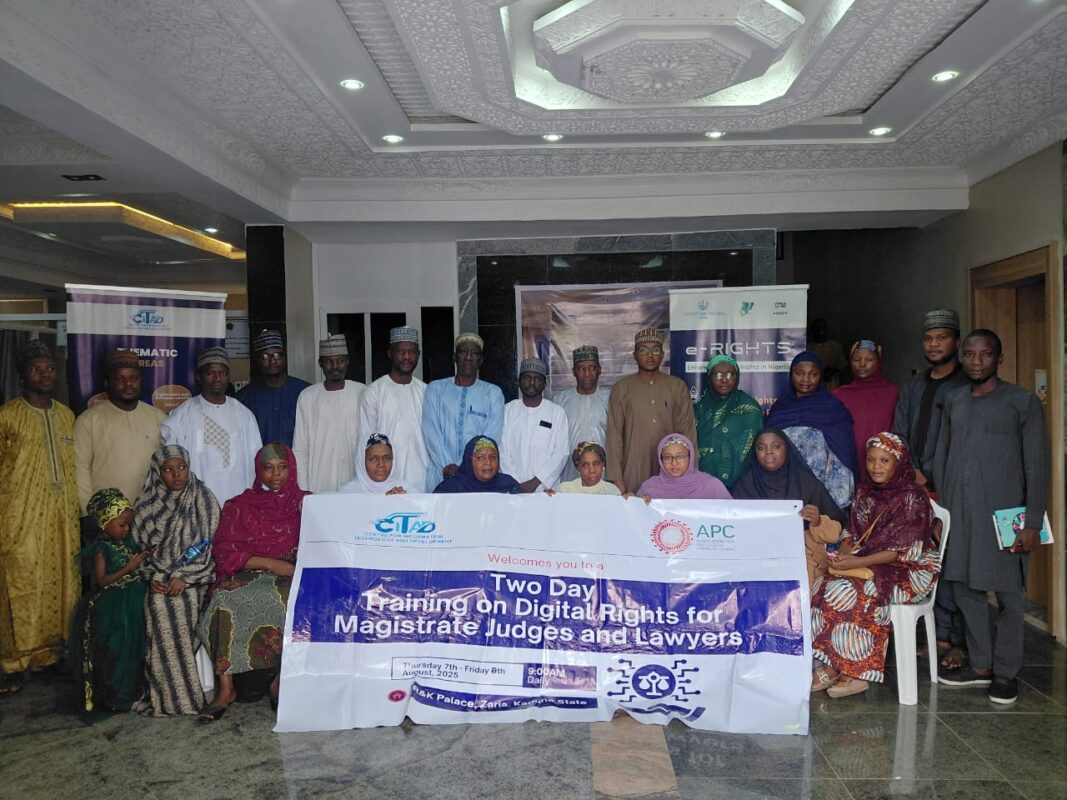
REPORT OF A TWO-DAY TRAINING ON DIGITAL RIGHTS FOR MAGISTRATE JUDGES AND LAWYERS ORGANIZED BY THE CENTRE FOR INFORMATION TECHNOLOGY AND DEVELOPMENT (CITAD)

Listen to this article

Date: 7 th and 8 th August, 2025
Venue: R&K Palace Hotel, Zaria, Kaduna State
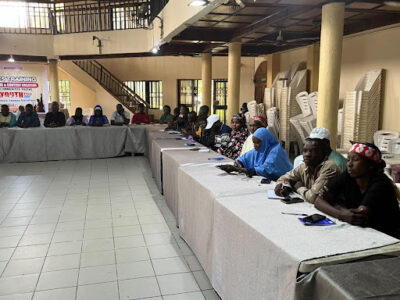
In its efforts to promote and enhance the legal processes in the area of digital rights in
Nigeria, the Centre for Information Technology and Development (CITAD), with the support
of the Association for Progressive Communications (APC), organized a two-day training for
10 male and 10 female magistrate judges and lawyers in Kano State. The aim of the training
was to equip the participants with the knowledge and practical skills to understand,
interpret, and safeguard digital rights within the country’s legal framework.
In his welcome remarks, the Executive Director of CITAD, YZ Ya’u, represented by the
Program Officer, Digital Rights, Ali Sabo, stated that the protection of digital rights has
become increasingly important worldwide, with Nigeria facing rising challenges in the area.
He observed that violations, mostly committed by both state and non-state actors, have
become common, frequently targeting journalists, dissenting voices, and opposition figures.
He continued to state that the Cybercrime Act of 2015 was originally intended to tackle
cyber-related offences; unfortunately, sometimes it is used to suppress freedom of
expression and silence criticism online. Speaking further at the training, the Eexecutive
Director mentioned that beyond legal restrictions, the country’s digital space is also
grappling with issues such as online gender-based violence, misinformation, fake news, and
other forms of digital abuse with some devastating consequences, including loss of life
through suicide.
Mr. Ya’u also noted that protecting digital rights is inseparable from safeguarding broader
human freedoms, such as freedom of expression, association, movement, and access to
information, both online and offline.
At the end, the Executive Director concluded that CITAD’s interventions go beyond public
awareness campaigns; they include providing free legal support to victims of digital rights
violations and urging the judiciary to play a more active role in recognizing, reporting, and
adjudicating such cases to help build a safer and more rights-respecting digital space in
Nigeria.
On the first day of the training, the participants were taken through “Understanding the
Rationale for Digital Rights” by Hussaini Hussaini, Associate Partner at Easward Legal
Services. The facilitator discussed the meaning of digital rights; a case study of a political
view on the provision of access to the internet for all; internet regularity and digital rights;
cyber libertarians; cyber paternalists; network communitarianism; and how digital rights can
be safeguarded. In the second presentation, Harira Wakili, Africa Gender Regional
Coordinator for the Local Networks Initiative, discussed with the participants “Special
Dimension of Digital Rights: Gender Violence Online,” while Mojirayo Ogunlana, Executive
Director of the DIGICIVIC Initiative, took the participants through “Legal Development

Relating to Digital Rights: The African Continent.” In her presentation, Mojirayo discussed
some of the developments related to Digital Rights in the continent, such as the Malabo
Convention, African Declaration on Internet Rights and Freedoms (AfDec), Network of
African Data Protection Authorities (NADPA), etc.
On their part, the CITAD Digital Rights Officer, Ali Sabo, and Kelechi Mmadu, Media Officer,
Ndukwe Kalu Foundation, facilitated the sessions on “Privacy and Data Protection (DPA)”
and “Special Dimension of Digital Rights: Protection of Children Online,” respectively. In his
presentation, Ali focused on issues such as NDPA and Emerging Concerns; Data Privacy; Why
Data Protection Matters; Global Shift – The Era of Data Protection Laws; Who Must Comply
with NDPA; Key Definitions in NDPA; Rights of Data Subjects; Principles of Data Protection
(NDPA); Role of the Nigeria Data Protection Commission (NDPC); What Organizations Must
Do; and What Individuals Can Do. On his part, Mr. Kelechi discussed the Importance of Child
Protection Online; Online Risks to Children; Legal Perspective on Child Protection Online;
United Nations Convention on the Rights of the Child; International Telecommunication
Union Guidelines; and Nigerian laws regarding Child Protection.
On the second day of the training, Hussaini Hussaini facilitated a session on the “Overview
of National Regulations that have Implications on Digital Rights.” The facilitator focused his
presentation on areas such as the security and welfare of the people; the obligation of the
mass media to uphold the FODPSP; Right to Dignity of the Human Person; Right to Fair
Hearing; Right to Privacy; Freedom of Expression and the Press; Right to Peaceful Assembly
and Association; Right to Freedom from Discrimination; and Derogation of Fundamental
Rights.

Leave a Reply

Your email address will not be published. Required fields are marked *