

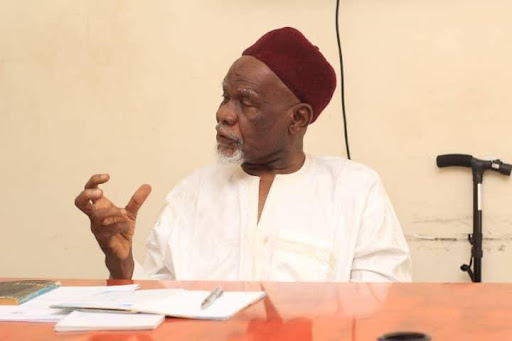
Hosted by: Center for Information Technology and Development (CITAD)
Date: December 2–4, 2025
Time: 9:00 AM – 4:00 PM
Venue: Tajudeen Hall, CITAD Office
Participants: 30 young people (26 male, 4 female)
Resource Persons: Engr. Y’z (Director, CITAD), Prof. Ibrahim Mu’azzam, Prof. Ibrahim Bello Kano
Paper Presentation: “Thoughts and Contributions to Pan-Africanism and African Unity” by Tajudeen Abdul-Raheem,
presented by Sani Muhammad Khamees
Event Overview
The 7th edition of the Ibrahim Mu’azzam Institute brought together young participants from different backgrounds and different fields of study for three days of interactive discussions, lectures, and paper presentations.. 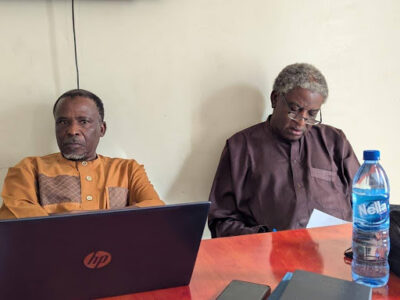
The event focused on philosophy, political theory, ethics, and indigenous intellectual traditions, providing participants with tools to think critically about society, governance, and human behavior.The training was an interactive class, with active engagement between the resource persons and the participants. The sessions were highly participatory and full of discussion.
Paper Presentation Highlights
The paper presented by Sani Muhammad Khamees focused on Tajudeen Abdul-Raheem, highlighting:
- Background and Biographical Formation
Early and later influences shaping his philosophical and political thought
- Contributions to Pan-Africanism
Role in the 7th Pan-African Congress, promoting non-racial Pan-Africanism
Involvement in pro-democracy struggles across Africa
Advocacy for women’s rights and emancipation
- African Unity and Conflict Management
Contribution to the transition from the Organization of African Unity to the African Union
Involvement in major African conflicts 1994 Rwandan Genocide Second Congo Wars
Conflicts in the Horn of Africa, including Sudan and Ethiopia–Eritrea wars
Key Philosophical Themes Discussed
Epistemology (Sources of Knowledge)
Knowledge comes through the senses (eyes, hands, tongue) and human experience, not only through abstract reasoning.
Ethics and Morality
Ethics studies what makes actions moral or immoral.
Morality is culturally relative and varies across societies (e.g., Africa vs. Europe).
Logic
- Valid arguments are based on reasoning, not emotional or lengthy speeches.
- Logical systems help analyze sound reasoning and fallacies.
- Indigenous Philosophy (Kano/African)
- Kano and Hausaland had rich philosophical traditions addressing ethics, governance, and knowledge.
- Scholars like Abdullahi Sukār explored morality, discipline, and ethical living (e.g., Adiyatu al-Muridiyya).
Political Philosophy
Al-Maghili’s works (e.g., Taj al-Muluk) on leadership and governance
ʻAbd al-Qasim ibn Hafsan wrote an early form of a constitution
ʻAbdullahi ibn Fawdan wrote on leadership and administration influenced by Al-Mawardi
Logic and Symbolic Reasoning
Aristotelian logic influenced Kano through Arabic scholarship
Manuscripts like ʻIlm al-Jabr treated letters and numbers as metaphysical principles
Metaphysics and Theology
Islamic theological traditions (Mu‘tazilism and Ash‘ariyyah) used philosophy and logic to address:
- Existence of God
- Causality
- Free will vs. determinism
- Prophecy and miracles
Philosophy and Society
Philosophers respond to real social problems:
- Plato & Aristotle → forms of government
- Hobbes → absolutism shaped by civil war
- Marx → workers’ rights shaped by industrial exploitation
Purpose of Philosophy
To understand societal problems and propose solutions
Encourages critical thinking and revisiting Indigenous intellectual heritage
Key Philosophical & Political Theory Points
Marx: Surface vs. Depth
Social reality has a visible surface and hidden structures (class, power, economy).
Science exists because appearance and essence do not coincide.
Ideology (Marx & Engels)
Ideas can “haunt” societies and shape political reality.
Ideologies influence perception and interpretation of events.
Language and Meaning (Saussure, Derrida)
Knowledge is Not Static
Scientific and social knowledge changes over time
Political and philosophical theories evolve through debate and crisis
Foucault: Archaeology, Genealogy, and Discourse
Concepts like “madness” or “normality” are historically constructed
Ideas develop through crises and conflicts, not linear progress
Discourses include some ideas and exclude others; excluded ideas often return
Freud: Return of the Repressed
Excluded ideas influence meaning and social behavior unconsciously
Baudrillard: Simulation & Hyperreality
Media and technology create experiences that replace direct reality
Political promises, advertisements, and consumer culture simulate reality
Ideology, Morality, and Human Behavior
People may follow ideologies inconsistently due to ignorance or personal gain
Human fallibility is universal; everyone commits wrongs
Ideologies have practical consequences and may conflict in real-life implementation
Historical, cultural, and social contexts shape ideology, e.g., Northern Nigeria’s multi-ethnic society
Misinterpretation of religion or ideology can contribute to extremism
Criticism vs. Critique
Criticism
Points out faults or moral judgments, often without solutions
Critique
Goes deeper to analyze causes and motivations
Triple critique approach: identify problem → analyze causes → suggest solutions
Responding to personal attacks requires understanding motives, not retaliation
Knowledge and Intellectual Growth
Criticism and critique are essential for intellectual development
Effective critique requires deep analysis and practical understanding
Continuous learning and questioning assumptions are vital for personal and societal growth
Life is experienced beyond books; reflection and lived reality are important for understanding
Takeaways
Philosophy and political theory help analyze power, society, and reality beyond appearances
Language, ideology, and knowledge are unstable and context-dependent
Critical thinking is essential for understanding social norms, religion, technology, and politics
Revisiting African intellectual heritage is key to solving contemporary challenges
Conclusion
At the closing of the training, all participants were awarded certificates of completion. In appreciation of their participation, the Director of CITAD presented each participant with two complimentary books authored by Professor Ibrahim Mu’azzam and published by CITAD.