

|
Getting your Trinity Audio player ready...
|
Awareness to End Luggage Tag Swapping to Aid Drug Trafficking at Nigerian Airports by Amnesty International Nigeria and Center for Information Technology and Development
(CITAD), Abuja, 30 September 2025.
BACKGROUND
In recent years, Nigeria has witnessed a disturbing trend of innocent travelers being implicated in drug trafficking due to the criminal act of luggage mismanagement and illicit planting of drugs at major international airports. This practice, often orchestrated by organized drug cartels in collaboration with compromised airport personnel, has led to the
wrongful detention, prosecution, and in some cases, execution of Nigerian citizens abroad, particularly in Saudi Arabia.
According to Amnesty International’s July 2025 report, 32 Nigerians currently face death sentences in Saudi Arabia for drug-related offences many of whom may be victims of
manipulated baggage processes at Nigerian airports. Notable incidents include the wrongful detention of Zainab Aliyu and Ibrahim Abubakar in 2019, both later exonerated
after investigations revealed they were victims of a cartel operating out of Mallam Aminu Kano International Airport. More recently, in August 2025, six staff members of Nigerian
Skyway Aviation Handling Company Plc were arrested by the NDLEA for their involvement in planting drugs in passengers’ luggage destined for Saudi Arabia.
These cases not only highlight systemic lapses in airport security and baggage handling but also expose Nigerian travelers to grave human rights violations, international legal risks,
and irreversible consequences such as capital punishment.
PROCEEDINGS
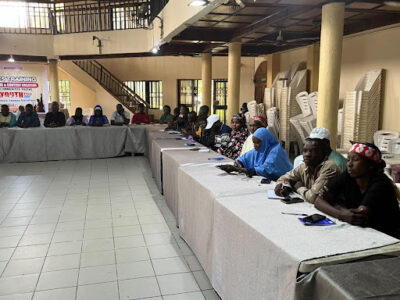
1. Amnesty International Nigeria and the Center for Information Technology and Development held an awareness with government agencies in the aviation industry, airline operators, immigration, drug management and anti-corruption agencies, justice actors, civil society organizations, and members of the media in Abuja on30 September 2025.
2. The initiative was convened to increase awareness on the growing cases of luggage tag swapping and mismanagement at Nigerian airports, a practice exploited by drug trafficking networks and often facilitated by compromised airport personnel. These actions have increasingly led to the wrongful implication and arrest of innocent passengers which often results in death penalty in certain countries.
3. The event underscored key issues:
a. The urgent need for the justice system to proactively safeguard the rights of Nigerian citizens against the criminal operations of drug cartels using airports as transit points.
b. The importance of a strategic approach that includes raising public awareness, promoting vigilance among travelers, and strengthening institutional accountability to prevent further victimization.
c. The necessity of rebuilding trust between air travelers and airline authorities, ensuring that law-abiding citizens are protected from risks such as planted drugs, swapped luggage, and unjust detentions.
d. The awareness highlighted that investigations confirm the involvement of criminal syndicates who exploit weaknesses in airport security systems, sometimes with the collusion of insiders. This dual threat undermines national integrity and places unsuspecting passengers at great risk.
e. It was noted that systemic weaknesses within airport operations also contribute to the poor safety and security resulting in luggage mismanagement.
f. Existing gaps in detection infrastructure such as the lack of proper scanners and canine units create vulnerabilities that criminal elements exploit.
g. Internal reviews reveal systemic weaknesses in airport operations, particularly in baggage handling oversight, which must be addressed.
h. The trafficking of illegal goods and the manipulation of airport processes a damages a country’s reputation and endanger the lives and rights of people, especially in countries where such offenses carry severe penalties, including the death penalty.
SURVIVORS EXPERIENCES
4. A real-life case was shared involving a Nigerian traveler who was wrongfully accused of drug trafficking upon arrival in Saudi Arabia due to an extra luggage added to the traveler unbeknownst to her.
5. The traveler, unfamiliar with the local language, was subjected to interrogation and compelled to sign documents in Arabic without translation or legal assistance.
6. The emotional distress was compounded by the separation from her family and the humiliation endured, despite having no knowledge of or connection to the illegal contents.
7. Subsequent investigations by the NDLEA confirmed that the luggage bearing her passport details had been tampered with at a Nigerian airport, implicating corrupt airport personnel.
8. The case shows the vulnerability of innocent citizens and the urgent need for Nigerian authorities to implement safeguards and provide diplomatic intervention for affected nationals abroad.
RECOMMENDATIONS TO TRAVELLERS
Luggage Safety and Personal Responsibility:
9. Passengers are advised to personally check their luggage, avoid delegating this task, and ensure proper documentation is issued.
10. Travelers should photograph and track their luggage through every stage from check-in to boarding to minimize the risk of tampering or misidentification.
11. Double-checking luggage tags and contents at both departure and arrival points is strongly encouraged.
12. Citizens are reminded to familiarize themselves with and comply with relevant laws and travel protocols of their destination countries to avoid unintentional complicity in illegal activities.
13. Travelers are urged to remain alert and immediately report any suspicious behavior, irregular requests, or inconsistencies to airport authorities.
POLICY RECOMMENDATIONS
Confidential Reporting Mechanisms:
14. The Ministry of Aviation in collaboration with relevant agencies should establish safe and confidential whistleblowing channels within the aviation sector to encourage the reporting of insider threats, corruption, or suspicious activities without fear of retaliation.
Enhanced Security Technology:
15. The Ministry of Aviation should adopt digital tagging systems using photographs and biometric data to improve luggage identification and prevent tampering.
16. Airport authorities should deploy tamper-proof luggage tags with barcodes and RFID technology.
17. The Ministry of Aviation should install advanced scanning equipment and improved surveillance infrastructure across airports. Staff Vetting and Institutional Reform:
19. Implementation of strict background checks and continuous vetting of all airport personnel, particularly those involved in luggage handling.
20. Introduction of staff rotation policies across airports to minimize familiaritydriven corruption and reduce vulnerability to insider threats.
21. Improvement of staff welfare and fair promotion practices to reduce susceptibility to compromise and corruption.
22. There is a need for open communication channels between airlines, security agencies, and passengers.
23. Airlines agencies are encouraged to adopt best practices from international airports and strengthen collaboration with foreign partners.
24. The Federal Airport Authority of Nigeria in collaboration with National Drug Law Enforcement Agency should identify traffickers’ methods, which often involve preying on vulnerable groups such as the elderly, disabled, rural travelers, and firsttime fliers.
25. Ensure passenger-centered approaches that focus on protecting the most atrisk individuals. Legal Enforcement and Deterrence:
26. Justice agencies should ensure firm and consistent application of the law against individuals involved in criminal activities, to serve as an effective deterrent.
27. The implementation of stricter accountability frameworks is necessary to detect and deter misconduct among aviation personnel.
28. The Ministry of Foreign Affairs through Nigerian Embassies should ensure that accused persons abroad understand proceedings in languages they can comprehend.
29. Create policies that prioritize human rights and avoid immediate detention or handcuffing of suspects until thorough investigations are concluded.
30. Equip travelers with clear information on who to contact and what steps to take in the event of an arrest or misunderstanding abroad.
31. Strengthen partnerships with global human rights organizations to advocate for fair treatment and safeguard the rights of Nigerians abroad, including those facing capital punishments.
Continuous Awareness
32. The National Orientation Agency and relevant partners should ensure regular sensitization campaigns to inform travelers of luggage safety practices and risks related to drug trafficking. This should be extended to schools, communities, churches, and mosques so that young people and families understand the dangers.
33. Airline Operators should reinforce airlines’ responsibility to educate passengers as part of their duty of care.
34. The media must prioritize sustained coverage of airport security lapses, wrongful arrests, and human rights abuses linked to drug cartels.
35. Civil society organizations must expand awareness in local languages, reaching vulnerable communities who are often manipulated into trafficking. Capacity Building and Training:
36. All relevant airline agencies and operators should strengthen training programs for airport staff to improve professionalism, ethical conduct, and vigilance against illicit activities, with support from relevant stakeholders.
CONCLUSION
The Independent Corrupt Practices and Related Offences Commission reaffirmed its readiness to deploy its expertise, technology, and partnerships to help close loopholes in airport operations and ensure accountability. The Airline Operators of Nigeria affirmed their readiness to cooperate fully in protecting travelers. Ministries, agencies, and organizations should integrate traveler enlightenment into their outreach, ensuring that Nigerians understand their rights and responsibilities before leaving the country.
Effective collaboration between relevant government agencies, civil society, ground handlers, and airline operators to ensure practical implementation of reforms. The event reaffirmed the collective commitment to ensuring that Nigerians can travel safely, with dignity, and without the fear of wrongful implication in drug-related crimes.