

|
Getting your Trinity Audio player ready...
|
Building Community Champions to End Gender-Based Violence in Rural FCT
As cases of gender-based violence continue to surface across communities, strengthening local response systems has become increasingly urgent. In early December 2025, the Centre for Information Technology and Development (CITAD), with support from ActionAid Nigeria, convened a three-day training aimed at building community capacity to prevent and respond to Gender-Based Violence (GBV) in rural parts of the Federal Capital Territory.
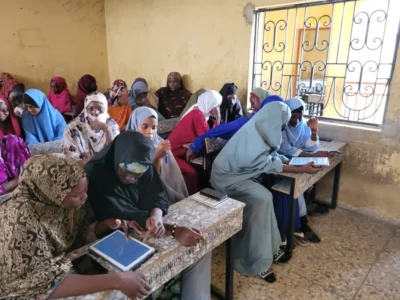
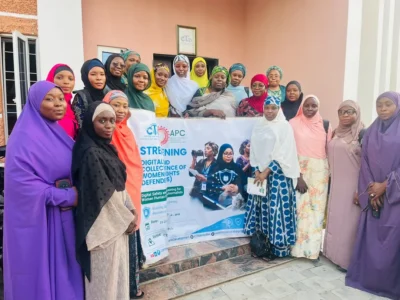
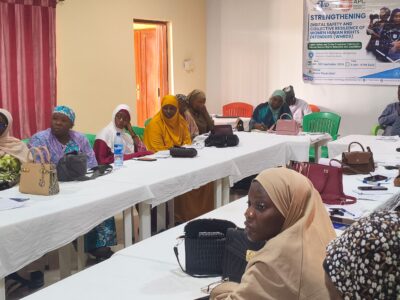
Held between 2 and 4 December as part of the global 16 Days of Activism Against Gender-Based Violence, the training brought together 40 participants drawn from eight rural communities across five Area Councils—AMAC, Bwari, Kuje, Kwali, and Gwagwalada. Selected as GBV paralegals and community champions, participants were equipped with practical skills to identify, document, and refer GBV cases while working within existing legal and institutional frameworks.
The programme focused on core areas including gender concepts, forms and consequences of GBV, relevant national laws and women’s rights, ethical and survivor-centred case management, and referral pathways. Sessions were delivered through structured discussions, case analysis, and scenario-based exercises designed to reflect the realities of rural communities. Religious texts from both the Bible and the Qur’an were used to address misconceptions and to demonstrate that faith-based teachings do not condone violence or discrimination.
Beyond individual learning, the training placed strong emphasis on coordination and sustainability. Participants examined cultural norms that enable violence, mapped local referral networks, and developed community-specific action plans to guide GBV prevention and response activities in 2026. These plans set out clear priorities, timelines, and roles, anchoring responsibility at the community level.
At the conclusion of the training, each of the eight communities established a GBV Community Response Team to support early intervention and referrals. Participants received paralegal certificates and identification cards to formalise their role and enhance accountability. They were also linked to relevant institutions, including Area Council GBV desk officers, the National Agency for the Prohibition of Trafficking in Persons (NAPTIP), the National Human Rights Commission (NHRC), the Ministry of Women Affairs, WRAPA, and other service providers.
Participants reported increased confidence and clarity in handling GBV cases, particularly in documenting incidents and guiding survivors through referral processes. Several noted that the training helped reposition GBV as a legal and human rights issue rather than a private family matter. For some, this shift is already informing conversations and interventions within their communities.
Through this initiative, CITAD continues to strengthen community-level structures that complement formal institutions, ensuring that responses to gender-based violence are timely, coordinated, and grounded in local realities.