

|
Getting your Trinity Audio player ready...
|
Addressing the Gender Digital Divide and Expanding Business Opportunities for Women in Northern Nigeria (Agenda-WINNIG)
Training of Trainers (ToT)
6th – 7th March 2026 | Bjorn Beckman Hall, CITAD Office
This report summarizes the two-day Training of Trainers (ToT) organized by center for information technology and development CITAD under the Addressing the Gender Digital Divide and Expanding Business Opportunities for Women in Northern Nigeria (Agenda-WINNIG), aimed at equipping participants to conduct digital literacy, online safety, Digital hygiene and entrepreneurship training for women and girls. This phase of the project focuses on UTME preparations from March to April, before continuing with other modules.
Day One: 6th March 2026
Opening Activities
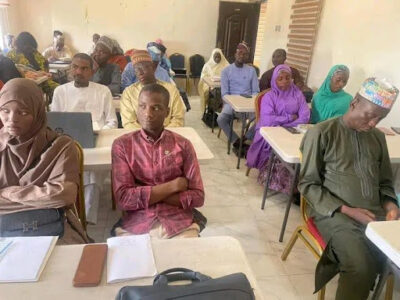
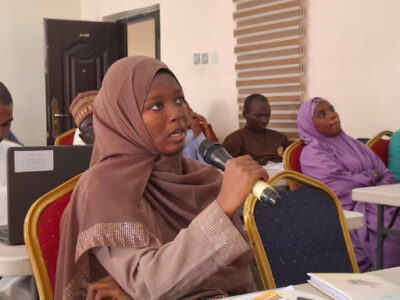
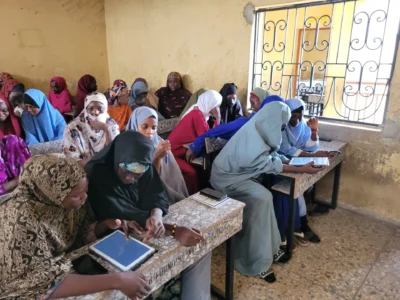
The training began at 9:00 AM with an opening prayer by Kamal Garba, followed by participant introductions and consent for photography throughout the two-day program. The Project Manager, Fatima Babakura, delivered the welcome remarks, appreciating participants from diverse organizations and states. The project targets Kano and Bauchi, where many women have limited access to digital tools and skills.
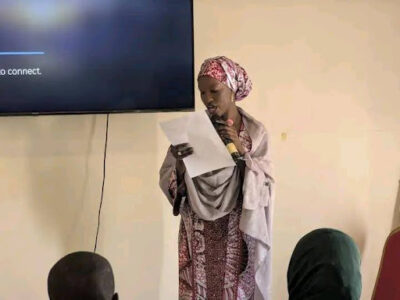
The Project Manager, Fatima Babakura, delivered the welcoming remarks.
 Objectives of the Training
- Strengthen relationships with partners.
- Introduce gender inclusion concepts.
- Equip participants to train women and girls in digital literacy and digital safety.
Participants
- 8 participants from Bauchi
- 12 participants from Kano
- 8 participants from Itas/Jama’are
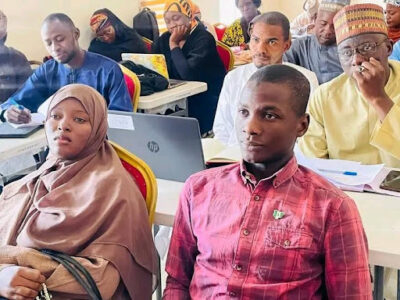
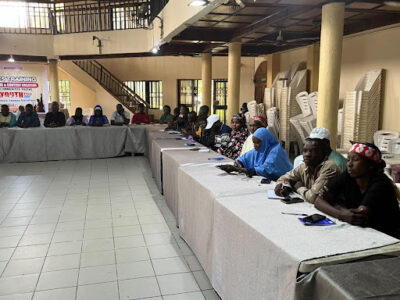
Total: 28 participants (11 female, 17 male)
Representing organizations including: Girls Gate Initiative for Employment and Development, Kano State Qur’anic and Islamic Schools Management, Ministry of Women Affairs, FOMWAN, Isa Wali Empowerment, WRAPA, Zumuntan Mata Bauchi, Kibiya Technology and Innovation Hub, Science and Technology Schools Board, Bauchi Ministry of Education, NUJESS, Women in Da’awah Association Itas, Indakurma, Youth Wing of CAN, WOWI CAN, Women Fellowship, Islamic Movement in Nigeria, NAE JAS, KBLC.
Training Sessions
Pre-Evaluation – Conducted by John Otaro, M&E Project Officer.
 Purpose of the Training
The Training of Trainers (ToT) under the Agenda-WINNIG project was conducted to:
- Build capacity of trainers to deliver digital literacy, online safety, and digital hygiene training to women and girls in Kano and Bauchi states.
- Reduce the gender digital divide by equipping women and girls with essential digital skills for education, communication, and entrepreneurship.
- Strengthen partner organizations to sustain digital skills training beyond the project period.
- Improve access to technology for students, including practical training with tools like the JAMB exam software, to enhance exam preparedness.
- Promote safe online behavior and safeguarding practices, ensuring women and girls are protected from cyber harassment, abuse, and other online risks.
- Enable monitoring and evaluation of training impact, allowing trainers to track progress, document outcomes, and continuously improve training quality.
- Facilitate community-level training, empowering women and girls in their communities to use digital tools effectively and responsibly.
Project Overview & Purpose of ToT – Delivered by Dr. Yunusa Ya’u, Director of CITAD.
 Project: Addressing the Gender Digital Divide and Expanding Business Opportunities for Women in Northern Nigeria
Duration: 18 months starting February 2026
Objectives:
- Provide digital literacy training for women and girls.
- Leverage learning through partners for sustainability.
- Engage stakeholders to bridge the gender digital divide.
Training Streams
Digital Literacy – For women and girls who are not computer literate. Target groups: secondary school girls, girls who did not complete secondary education, and adult women (16–40 years).
Safety and Digital Hygiene (NauraTsataceclya, Hausa for “Safe Digital Space”) – Digital skills and online safety awareness.
Targets
- 15,000 digitally literate women and girls.
- 15,000 trained in online safety and digital hygiene.
- 5,000 women trained in digital entrepreneurship and linked with business support.
- 120 partner staff trained to provide ongoing support.
- Total: 20,120 participants (excluding digital hygiene training).
Other Project Activities
- Production of policy briefs (2 policies, 1,000 copies each).
- Survey of public digital literacy training facilities (baseline, year one, project end).
- Beneficiary tracer surveys every six months.
- Profiling of high-impact beneficiaries.
Linkages and Facilitations:
Business clinics, creativity and innovation fairs, private sector forums, virtual market onboarding, Privacy Protection Day, Girls in ICT Day, Role Model Forums, stakeholder engagement at state and federal levels, town hall meetings.
Participants Selection
Media advertisements.
Partner organizations and state actors for mobilization.
Collaboration with state ministries of education for school-based recruitment.
Key Message
Many girls and women currently fail JAMB examinations due to lack of exposure to digital tools, computer literacy, particularly in rural areas. By providing access to digital literacy, safety, and technology, women and girls can participate fully in society and access education and economic opportunities.
Digital Literacy Training
Facilitator: Muhammad Bello Yahaya
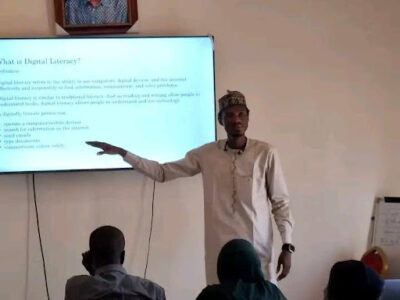 Digital literacy is to equip participants with basic computer and Internet skills for education, communication, and practical use in everyday life.
Introduction to Digital Literacy: Understanding computers, digital devices, and the Internet.
Importance of Digital Skills: Essential for education, communication, online services, and skill acquisition.
Basic Parts of a Computer: Monitor, keyboard, mouse, system unit.
Basic Computer Operations: Mouse control, typing, document creation, file management, folder organization.
Use of Smartphones: Access to Internet, WhatsApp, email, educational videos.
Understanding the Internet: Global connectivity for information, communication, and learning.
Web Browsers & Search Engines: Google Chrome, Edge, Firefox; Google, Bing, Yahoo.
Effective Internet Searching: Using specific keywords for reliable information.
Practical Uses: Online business, learning, communication, language translation.
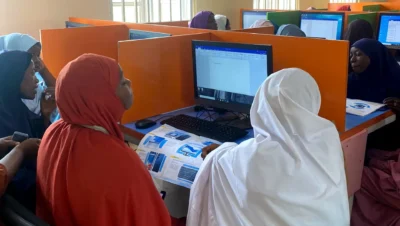
JAMB Software Demonstration
 Facilitator: Dahiru Na’im
- For the Trainers to train participants on how to use digital exam tools for learning and assessment.
- Demonstrated the JAMB software interface and functionality.
- Showed participants how to select subjects, answer questions, submit exams, and correct mistakes.
- Provided hands-on guidance to ensure participants could navigate the software confidently.
- Highlighted the role of digital tools in improving exam preparedness for students.
Safeguarding Training
Facilitator: Zainab Saliha Usman
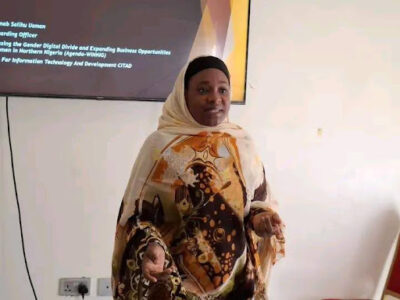 To ensure participants understand how to prevent harm, protect vulnerable individuals, and create safe environments in programs and communities.
- Focused on prevention, protection, and ethical conduct.
- Identification of vulnerable groups: children, persons with disabilities, elderly, socially/economically challenged.
- Forms of abuse: sexual exploitation, harassment, gender-based violence, bullying, discrimination.
- Early warning signs: behavioral changes, fear, withdrawal, unexplained injuries.
- Reporting procedures: importance of speaking up and following referral processes.
- Emphasis on professional boundaries, consent, and adherence to safeguarding policies.
Day Two: 7th March 2026
Recap of Day One: Led by John Otaro
Digital Safety and Mobile Security
Facilitator: Suhail Sani
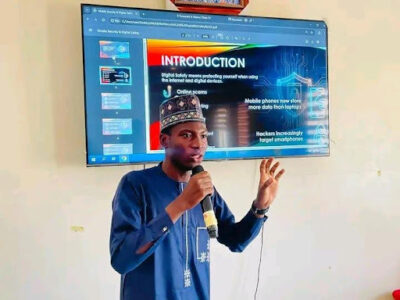
- To teach participants how to protect personal and professional information on mobile devices and prevent cyber attacks.
- Mobile devices store sensitive personal and professional information.
- 80% of cyber attacks now target mobile users.
- Risks from excessive app permissions and free applications.
- Signs of compromise: battery drain, unusual data usage, unknown apps, slow performance.
- Security measures: trusted apps, review permissions, avoid unknown links, enable 2FA, avoid unsecured Wi-Fi.
Online Safety and Digital Hygiene
Facilitator: Yusuf Babagana
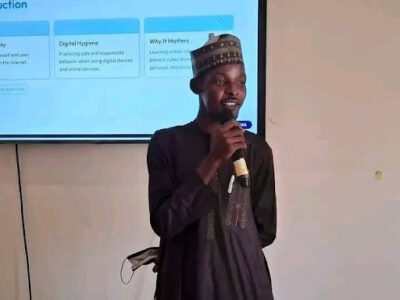 Online Safety and Digital Hygiene help participants use the internet safely, protect personal information, avoid scams, and maintain responsible digital behavior.
- Protect personal information: full name, phone, email, address, national ID.
- Avoid oversharing online; strong passwords; 2FA; social media privacy.
- Awareness of scams: phishing, fake offers, financial fraud.
- Safe app usage: download from trusted sources.
- Digital footprint awareness and digital wellbeing.
Monitoring, Evaluation, and Learning (MEL)
Facilitator: John Otaro
Monitoring, Evaluation, and Learning (MEL) to show participants how to measure impact, track progress, collect feedback, and improve training for women and girls.
Purpose:
Measure impact, track reach, demonstrate results, improve training.
Expected Outcomes:
Improved digital skills, increased economic opportunities, sustainable training capacity.
Trainer Responsibilities:
Document sessions, conduct pre/post-assessments, track attendance, report collect feedback.
Indicators of Success:
Increased mobile Internet use, participant completion, confident digital tool use.
Key Project Targets:
20,120 women trained in digital literacy and safety, 5,000 in entrepreneurship, 240 certified ToTs.
Transformational Changes:
Women gain confidence in digital tools, practice online safety, and utilize the internet for learning and business; partner organizations continue training independently.
The attendance sheet and report template will be shared via the WhatsApp group.
Conclusion
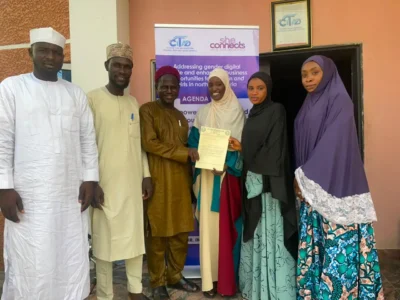
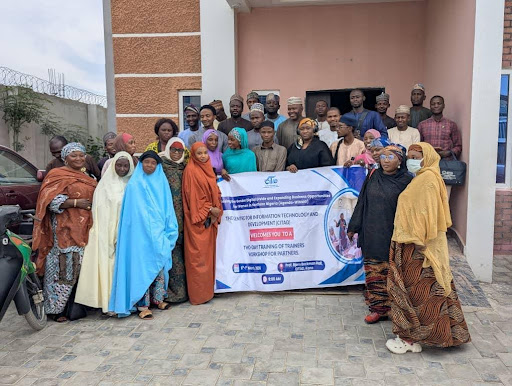
The two-day Training of Trainers (ToT) concluded with a post-evaluation and a group photograph. The training successfully equipped participants from Kano and Bauchi with the skills and knowledge to train women and girls in digital literacy, online safety, and safeguarding. Participants gained practical experience, including using digital tools such as the JAMB software, and learned how to protect personal information and create safe online and community spaces. The training contributes to reducing the gender digital divide and empowers women and girls to access education, technology, and economic opportunities in their communities.