

|
Getting your Trinity Audio player ready...
|
Introduction:
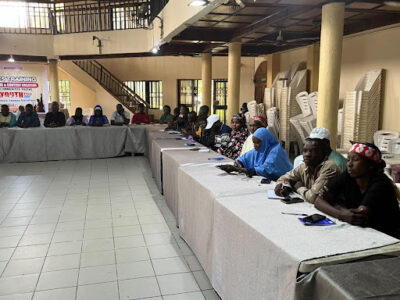
CITAD organized a two-day workshop for the management staff of Kano State Ministry for Public
Procurement, Monitoring and Evaluation came at the wheels of the appointment of the first
commissioner of the ministry and also, being the only state in the entire northern Nigeria that pioneered
such a ministry to promote openness and transparency on public service. The commissioner was
considered by CITAD, a friend who require every support to deliver his expectations from the
government. The ministry is expected to re-engineer the affairs of public procurement with a view to
getting value for money that will lead to effective service delivery in the state.
The workshop targeted the management staff (Directors) of the ministry headlining various sections of
the ministry. Ten Directors were carefully selected by the ministry for the workshop. Facilitators from
academia set the ground with overview of procurement practice and another on some selected case
studies for lesson learning. Similarly, a seasoned public procurement officer in Jigawa state, former
Director General of the state’s Due Process & Projects Monitoring Bureau shared experiences at the
sessions.
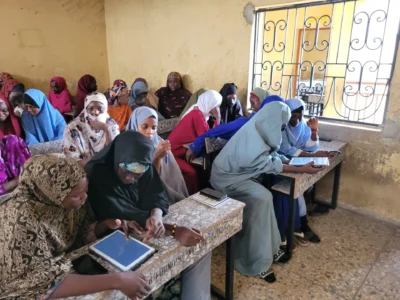
To introduce technology into the procurement process, CITAD’s M&E officer as well as the senior
technical officer made different presentations during the two-day sessions with a view to
introduce/strengthen the ministry’s IT skills for improved documentation, Data analysis, planning and
monitoring of projects.
Objective of the workshop:
In his welcome remark, the executive Director of CITAD stated the main objective of the workshop is to
strengthen the ongoing effort being carried out by the staff of the ministry on public procurement.
The workshop is not meant to conduct a series of group works rather, on sharing experiences and to
identify best practices in order to build more public trust in the area of procurement which ultimately
concerns service delivery.
Goodwill message by the Hon Commissioner of the ministry:
According to the commissioner, the session workshop has already provided an opportunity for
partnership, collaboration and development for the ministry and the state at large. The state has started
the review of its public procurement law within the context of Kano state. The governor approved (the
audit of the state procurements and disposal plan from May 2023-December 2024).
He however, stated that the ministry has no strong mechanism of M&E or other driving system in place,
rather committed to go to each LGA for physical verification of projects and programmes. Also, the state
will soon introduce the “integrity test” soon.
First presentation: by Dr Muhammad Aminu Aliyu, BUK on “Understanding procurement process and
systems and why they matter” –
(Synopsis)
It was understood that all procurements must be guided by a process if transparency is needed. The
presentation also stressed the need of involving “relevant” players in the procurement circle as one of
the best ways to achieve compliance by vendors. Also, the process emphasized the following
1. Periodic monitoring (recording and documentation of all procurements) in the public system
2. Need for concern around environmental sustainability under any public procurement process. In
the past two years, the world bank identified some universities to offer most sustainable
courses on environment with a view to preserve it for effective
(link to the presentation)
Suggestions on how to get best possible outcome in an organized procurement process –
Public offices MUST remove favoritism in the system and work on compliance with the
procurement process
Address cultural attitudes to fit into governance and to leverage on the emerging commercial
issues
Diverse legal and economic landscape
Issues around procurement process: these are potential issues or blockages within the system and they
require attention by the ministry in order to have a citizen – oriented procurement system while others
can be turned to opportunities as well –
Risks – fake identities. This is where some contractors use fake set ups to get recognized and
eventually become the selected vendors through fake identities. The ministry needs to be aware
of such practices. They often get untrue registrations, etc just to get contracts
Digital revolutions or the emergence of artificial intelligence. This may pose a challenge to the
local suppliers who are not exposed to emerging technology. However, such initiatives can be
turned for better by participating in the new skills
Cross border bids and opportunities for SMEs to participate in public tenders. This act is
required especially in the present economic reality where inflation is rapidly increasing by the
day. If government can open space for local SMEs, they can be empowered through the
tendering and bidding process
Unethical supplies – this is where supplier often time, gives gratification for a favour.
Government should clearly define
Human rights issues such as environmental concern, gender and child labour amongst others.
Comments from participants:
Every expenditure that is not provided in the budget is considered unlawful. Thus, strict
adherence to the process is required for the ministry to perform up to expectations
Virement during budget scrutiny in many instances affects effective discharge or
implementation of a viable public contract. The legislature therefore, needs to cautioned on
moving within the budget to avert “fraud” or misplacement of priorities at the expense of
transparency and accountability
Thers is low capacity among the citizens of the state in terms of applying for registration with
government and other financial institutions to access registration from the CAC and fit into the
business competitive environment as contractors to access loans. This deprived people to
benefit from government’s support to empower them locally with the state resources.
Religion and culture play role in not accessing loans from banks. Thus, government should
introduce an alternate to this in order to support SMEs to participate in public procurement
system
The public relations department of the ministry should support the sensitization of NANO and
small-scale businesses in the state on procurement processes
Second presentation on some case studies in selected model procurement laws
Professor Muttaka Usman (ABU Zaria)
(Synopsis)
In view of the presenter and a critical issue around the presentation was that, the Nigerian procurement
law is considered to be part of the initial colonial master’s legacy duly meant to protect and preserve
their interests. This is why the Nigerian procurement system at all levels is filled with theories that
remain unpracticed – giving way for unreviewed law to perpetuate fraud in the system.
Outline of the presentation – history of the procurement practice, UNCITRAL model, key provision of
the law, case studies and finally some proffered solutions. The entire system revolves around resources
and its allocation, how it is shared among citizens.
Key element of the presentation is the display of a Photo illustration (using a picture) to show how
ineffectively resources are used by people especially the public officers entrusted with the vast
resources of the land at the right time, place and circumstances) refer to the presentation link.
Comparative analysis of Kano and Jigawa on procurement process:
Currently, both states face a double-digital inflation, driven by escalating food and energy costs,
depreciation of Naira and persistent disruption in global supply chains.
Environmental issues (inappropriate refuse disposals, etc)
Sampled Case studies (specific procurement projects)
1. Infrastructure project
Under this contrast, the construction of houses by the two states is common on using citizens’
resources rightly or wrongly. For instance, is the construction of “low-cost” houses which ended up
becoming “high cost” houses by both states. Many key issues arose from the construction of such
houses, bridges, drainages or other similar capital projects –
1. Citizens were not involved in determining their immediate needs to understand whether they
actually prioritize houses or other things at the time of the initiative
2. Compensation was either poorly paid, not timely paid or land were grabbed by government for
the construction of the houses
3. Fixing of high rate for the purchase of the houses by citizens which turned to be unaffordable by
the same citizens
4. Non consideration of local contractors in both the tender and bidding process
5. Favoritism and gratification are common practice. The governor of the state has the final right to
award contract to whoever he so wishes thereby breaching the procurement process. This
practice often leads to quality compromise and elongation of contract period to attract
unnecessary review of the agreement in favor of contractor to attract personal benefit for the
public officers
Key provisions of the model law:
1. Open and competitive bidding
2. Procurement planning
3. Conflict of interest management
4. Transparency and disclosure
Challenges and implementation gaps:
1. Political interference
2. Capacity building (what capacity Is actually needed in specific instance, situation or stage)
3. Enforcement mechanisms
Potentials solutions and recommendations:
1. Strengthening institutional capacity within the procurement regulatory body
2. Enhancing transparency
3. Implementing robust anti-corruption measures
4. Citizen’s engagement
Comments/observations by participants:
1. Government is encouraged to introduce reform in its process (driven e-governance, etc)
2. Development and use of software in procurement agencies (ministries) to track projects and
support transparency
3. Review of the state law should be done and should be locally driven (local contractors including
all categories of businesses such as NANO, SMEs, etc should be involved in the process) for an
inclusive law
4. There is so much reliance on donor agencies to provide projects and programmes to public and
this retards the development of KANO state in many ways
5. Weak push by the CSOs on the state on effective Private Public Partnership (PPP)
6. Need to define ourselves (Ministry and the business community) considering the local
peculiarity of the state
7. Procurement process must not be entrusted in the hands of one person. This is to check the
excesses of individuals and abuse of powers and privileges
8. Not less than 78% of the completed project must be done before certification
9. Kano state law granted to use of 30% of the revenues generated by the ministry (for internal use
by the ministry). This proceed can be used to transform the ministry in many ways such as
reward to the staff and other welfare packages. This will certainly aid professionalism and
accountability of public resources.
An overview of general procurement in practice
Jigawa state experience
By Mall Ado Hussaini, MON
(highlights)
The presentation centred on how Jigawa state procurement law works, government benefits, citizens
benefits, empowering local contractors and how generally, the process works from initiating of demand
by government to the binding and finally to the award. The experience shared also touched on areas
such as –
Government holds retention fee until after a contractor is duly certified by the CBO in a particular
community where such procurement is meant to be implemented. Other issues identified in the
presentation included:
1. Jigawa state Due Process and Project Monitoring Bureau officially asked contractor before
signing any contract, there is need to have a proper understanding of the terms and conditions
of agreement. Where the contractor cannot understand, an interpreter will be made available.
This helps our local contractors and curtails misconception.
2. The law stated and is in practice that, where there is inadequate capacity on the part of local
contractor consideration should be given to outside contractors to ensure quality compliance
3. Upgrade of electronic procurement and many agencies are added into the platform (in Jigawa)
state
4. Specific methods of procurement such as direct procurement, etc must always guide all
procurements in order to have value for money.
5. The procurement law in Jigawa provided for “staff reward” and this aid prudence among staff
6. There has been involvement of the CSOs in the entire procurement process such as bidding,
certification, etc
7. Both pre and post qualification levels of getting best contractors are made clear by the projects
monitoring bureau
8. Ensuring that all requirements are stated in the advert pages before releasing it to the public
9. Bid opening – strict under safe but public space
Procurement monitoring planning:
1. It allows for continuous improvement by regular review of the process
2. Prudent management of public funds thereby promoting trust and confidence in the eyes of
citizens
Presentation on innovations in procurement system (Muhammad Bello)
This session described how technology is used in the public procurement system with a view to
revolutionize the Public Procurement through Innovation.
1. Introduce a way to generate revenue to sustain the system
2. Set up a mini workshop and train some selected café operators in Kano and train them on E-
procurement for subsequent step down to communities/contractors
To further understand the need for technology in the system, the traditional procurement system
(offline) was analyzed and the following were identified –
There is no Data management system in place
Misuse of Bureaucracy in the public procurement process
Likelihood of fraud
Time consuming and lots of paperwork as well as increased costs
The introduction of technology into the traditional procurement system certainly leads to
1. Government can received direct feedback from communities for increased accountability
2. Mobile app enabling citizens to monitor public projects and report issues. 3
3. Enhanced competition among suppliers
4. Enables citizens and civil society to monitor spending and identify potential red flags.
Another potential area that emerges and public servants need to be involved in the process are –
1. Arfticial intelligence (AI). Though government staff may not like this, it will reduce effort and
proper utilization of time
The MEL in public procurement system (Toward developing a procurement Monitoring Evaluation &
Learning) – Tools & Processes – John Otaro. This presentation centred around the following –
1. Key Monitoring APPROACHES – three different ways
– Regular Reporting: this approach should better agree upon by the agency’s monitoring
team and MUST set a standard to be maintained on the number of be monitoring team,
schedule/period of monitoring, team lead, etc,
– Stakeholder Engagement: here, relevant stakeholders should be included in all process
es. They include government officials, community leaders, religious leaders and civil
society organizations in the monitoring process
– Use of Technology: Implement software tools for real-time tracking and reporting
Tools for monitoring: It is recommended that; monitoring tools should always be developed by
the team with additional input from other actors in the process. The following tools can be used
in public procurement process
1. Procurement Dashboards: this is the use of technology and will reduce loss of Data,
automatic input and retrieval of Data, etc. also, it attracts visibility of the ministry’s
procurement process.
2. Data Visualization Software
3. Reporting Tools (Spreedsheets)
Contract in Islam: The Islamic Point of View on Contracts (Al-‘Aqd), by Muhammad Aminu Abdullahi,
ABU Zaria: – highlights of the presentation centred on five key Principles Governing Islamic and
Conventional Contracts
They are-
1 Consent and Mutual Agreement (at-Taradi): Both Islamic and conventional contracts require parties to
enter into the agreement willingly and without coercion.
2. Clarity and Certainty (Bayān and Yaqīn): Both systems emphasize the need for clear terms and
conditions, although Islamic law strictly prohibits ambiguity (gharar).
3. Lawfulness (Halal vs. Legal): Islamic contracts must involve lawful (halal) activities, while conventional
contracts permit any legal activity even if it conflicts with ethical principles in Islam.
4. Fulfillment of Obligations (Wafa’): Both Islamic and conventional systems expect parties to honor
their commitments.
5. Written Documentation (Kitabah)
Nest steps:
1. Kano state ministry of procurement to involve the CSOs in the procurement process
2. CITAD and the ministry to jointly work and introduce monitoring tool for the public procurement
3. The ministry to sensitize SMEs especially on involvement in the procurement process and
registration of their businesses
4. The ministry of procurement to consider the “reward system” in the next review of the
procurement law
5. Publication of procurement bulletin/Journals to be introduced by the ministry
Annexes:
1. Sample of procurement evaluation sheet – (By John Otaro) M&E Officer, CITAD
https://docs.google.com/spreadsheets/d/1SBiHc7RU0hJXhs45RR9NARVNBY0BryWu/edit?usp=shari
ng&ouid=111590164568100234517&rtpof=true&sd=true
2. MEL for Procurement practice – (By John Otaro) M&E Officer, CITAD
https://docs.google.com/presentation/d/1Hw8bdjAHy2nTAIs166svCSNmpCXnnbM-
/edit?usp=sharing&ouid=111590164568100234517&rtpof=true&sd=true
3. Technology and Innovation in Procurement – (By Muhamad Bello), CITAD
https://docs.google.com/presentation/d/19N-RDGiXhf3smPaG-
0jpOtyN2ZWhN2Ss/edit?usp=sharing&ouid=111590164568100234517&rtpof=true&sd=true
4. The Islamic point of view on contract (by Muhammad Aminu Abdullahi), ABU Zaria
https://drive.google.com/file/d/1mx-Kr2JE-VtXNsETZZQ_423CH9gQBH0A/view?usp=sharing
5. Dr Muttaka Usman, ABU Zaria
6. Dr Muhammad Aminu Aliyu (BUK), Kano
7. Overview of Jigawa state Procurement Process: by Mall Ado Hussaini MON:
https://docs.google.com/presentation/d/1BiE2db2CRwfEQqPULf3ppqLYfoLxxHMT/edit?usp=sharing
&ouid=111497022681070678391&rtpof=true&sd=true